That piercing, high-pitched shriek of a smoke alarm can be startling, especially when there’s no obvious fire. Whether it’s from a bit of smoke from the kitchen or a mysterious middle-of-the-night alert, your first instinct is to make it stop. But fumbling with a shrieking device on your ceiling is stressful. Understanding the right way to handle the situation is key to restoring peace and quiet safely. This guide provides clear, easy-to-follow instructions on how to turn off smoke alarm systems, helping you confidently manage those jarring false alarms.
Step-by-Step Guide to Silencing Your Smoke Alarm
When your smoke detector starts blaring, the most important first step is to quickly check for any real danger. Once you’ve confirmed there’s no fire, you can proceed with silencing the alarm. The method can vary slightly depending on whether your alarm is battery-powered or hardwired into your home’s electrical system.
Step 1: Identify the Type of Smoke Alarm
First, determine what kind of smoke alarm you have. Most residential alarms fall into two categories:
- Battery-Powered: These units are self-contained and run entirely on batteries. They are not connected to your home’s electrical wiring.
- Hardwired: These alarms are connected directly to your home’s electrical system and also have a backup battery. If one hardwired alarm goes off, it often triggers all other interconnected alarms in the house.
You can usually tell the difference by looking for a small green or red LED light. If it’s steadily lit, the alarm is likely hardwired and receiving AC power. If there’s no constant light (only an intermittent flash), it’s probably battery-only.
Step 2: Locate the Silence Button
Nearly all modern smoke alarms, both battery-operated and hardwired, have a “Silence” or “Hush” button. This is your first line of defense against a nuisance alarm. The button is typically the largest and most prominent one on the unit’s surface, often doubling as the “Test” button.
Press and hold the button for a few seconds. This should quiet the alarm for a period of 8 to 15 minutes, giving you time to clear the air of smoke from cooking or steam from the shower. If the smoke or steam clears, the alarm should reset itself automatically. If the concentration of smoke is still high after the silence period, the alarm will sound again.
Step 3: How To Turn Off Smoke Alarm by Resetting the Unit
If pressing the silence button doesn’t work or the alarm continues to chirp intermittently, it might need a full reset. This process clears any internal errors and is a common fix for persistent false alarms.
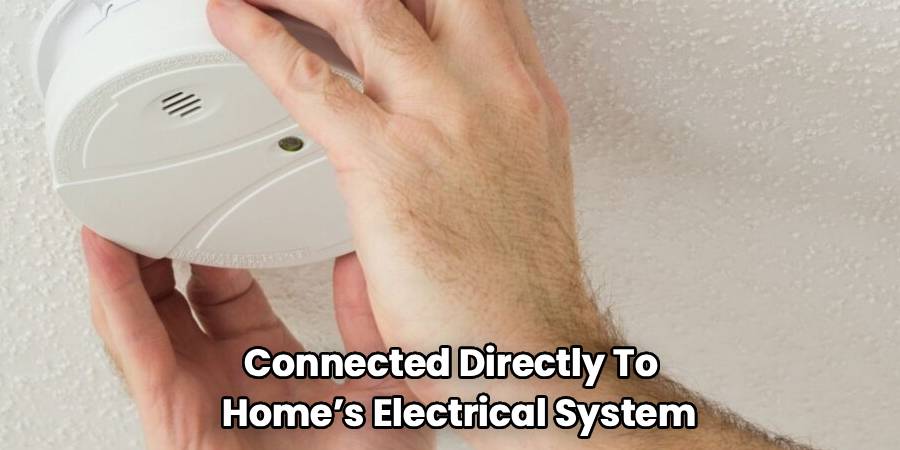
For a hardwired alarm, you’ll need to cut its power. Go to your circuit breaker panel and find the breaker that controls the smoke alarms. It may be labeled “Smoke Detectors,” “Alarms,” or could be part of a general lighting or bedroom circuit. Flip the breaker to the “Off” position.
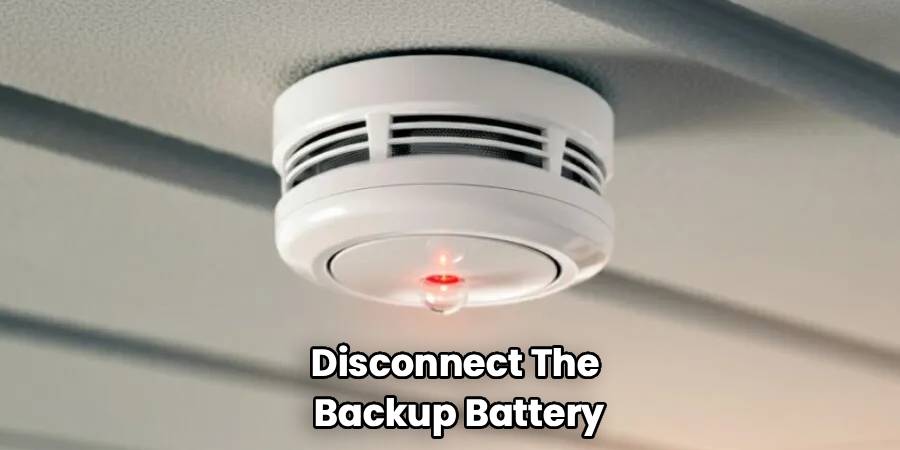
Next, you need to disconnect the backup battery. Twist the smoke alarm counterclockwise to detach it from its mounting bracket. You’ll see a small wiring harness connecting it to the ceiling. Gently unplug this harness. Then, open the battery compartment and remove the backup battery.
With the alarm completely disconnected from all power sources, press and hold the test/silence button for about 15-20 seconds. This step drains any residual charge from the unit’s capacitor, ensuring a full reset.
Afterward, reconnect the battery, plug the wiring harness back in, and reattach the alarm to its mounting bracket. Finally, go back to your breaker panel and flip the circuit back to the “On” position. The alarm may beep once when power is restored, which is normal.
For a battery-only unit, the process is simpler. Just remove it from the ceiling, take out the battery, and press and hold the test button for 15-20 seconds to drain residual power. Then, insert a fresh battery and put the alarm back in place.
Step 4: Address Intermittent Chirping
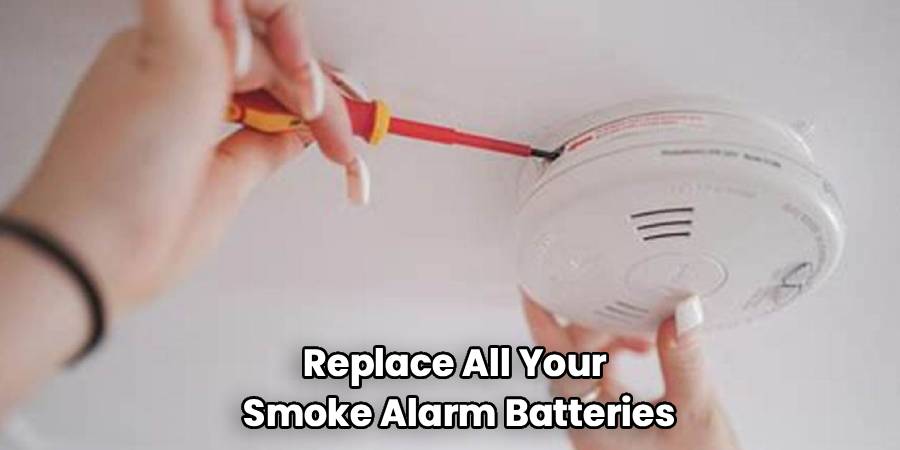
A smoke alarm that chirps every 30 to 60 seconds is not signaling a fire. This distinct, less frantic sound is a low-battery warning. The solution is straightforward: replace the battery. For hardwired units, this means replacing the backup battery. Always use the specific type of battery recommended by the manufacturer, and it’s a good practice to replace all your smoke alarm batteries at least once a year.
If you’ve replaced the battery and the chirping persists, it could be due to other issues. Sometimes, residual charge in the alarm can cause it to continue chirping after a battery change. Performing a full reset, as described in Step 3, should resolve this. Dust and insects inside the alarm’s sensing chamber can also cause chirps or false alarms. Use a can of compressed air to gently clean out the vents on the alarm’s cover.
Finally, consider the age of the alarm. Smoke detectors have a limited lifespan, typically around 8-10 years. If your alarm is approaching this age, its internal sensors may be failing, causing it to malfunction. Look for a manufacturing date on the back of the unit. If it’s more than a decade old, it’s time to replace the entire device.
Frequently Asked Questions
Navigating smoke alarm issues can bring up a lot of questions. Here are answers to some of the most common ones.
Why does my smoke alarm keep going off for no reason?
This is a frequent frustration for homeowners. The most common cause is something interfering with the sensor. Kitchen-related smoke, steam from a hot shower, high humidity, or even dust buildup can trigger a false alarm. Sometimes, small insects can crawl into the sensing chamber and set it off. Power surges or dips in electrical current can also cause hardwired alarms to sound briefly. If you’ve ruled out these causes and cleaned the unit, and it still goes off randomly, the alarm itself might be faulty or at the end of its life.
Can I just remove the battery to stop the beeping?
While removing the battery will stop a battery-powered alarm from beeping, it’s a dangerous practice. A smoke alarm without a power source cannot detect a fire, leaving you and your family unprotected. For a hardwired unit, removing the backup battery will not stop an active alarm caused by smoke or a malfunction, as it’s still running on AC power. It will, however, stop the low-battery chirp. The proper solution is always to replace the battery, not just remove it. Disabling a smoke alarm should only be a temporary measure while you fix the underlying issue.
How often should I replace my smoke alarms?
All smoke alarms, regardless of type, need to be replaced periodically. The National Fire Protection Association (NFPA) recommends replacing smoke alarms every 10 years. Over time, the sensors inside the units become less sensitive and may not detect smoke effectively. Most alarms have a date of manufacture printed on the back. Check this date, and if the unit is more than 10 years old, you should replace it immediately, even if it seems to be working correctly.
What is the difference between ionization and photoelectric smoke alarms?
There are two main types of smoke-sensing technology. Ionization alarms are generally more responsive to the small particles produced by fast, flaming fires. Photoelectric alarms are typically better at detecting the larger particles characteristic of slow, smoldering fires. Since you can’t predict what kind of fire might start in your home, the best protection comes from using both types of technology. Many manufacturers now offer dual-sensor alarms that incorporate both ionization and photoelectric sensors into a single unit. The U.S. Fire Administration recommends using a combination of both for maximum safety.
Conclusion
Knowing how to turn off smoke alarm systems is a practical skill for any homeowner. The first step in any alarm situation is to ensure there is no real fire. Once you’re certain it’s a false alarm, you can use the silence button for a temporary fix or perform a full reset for more persistent issues. Regular maintenance, including annual battery changes and cleaning, can prevent most nuisance alarms. Remember that a functional smoke alarm is a critical safety device. Never leave it disabled. By understanding how your alarms work and how to troubleshoot them, you can ensure your home remains both peaceful and protected.