
Finding yourself locked out of your car can be a frustrating experience. While calling a locksmith is always an option, understanding the mechanics of your car door lock can be an empowering skill. This guide provides a detailed, step-by-step approach on how to pick car door lock mechanisms for educational purposes.

It’s important to note that this information should only be used on your own vehicle or with the explicit permission of the owner. This process requires patience and a gentle touch, but with the right tools and technique, you can gain access to your vehicle without causing damage.
Why Understanding Lock Mechanisms Is Useful
Knowing the basics of how a car lock works can be incredibly beneficial in an emergency. Imagine being in a remote area with no cell service or facing a long wait for a locksmith. Having the fundamental knowledge to address a car lockout yourself provides a sense of self-reliance and can save you significant time and money. This skill isn’t about bypassing security for illicit reasons; it’s about problem-solving in a stressful situation. For anyone who enjoys understanding how things work, from garden irrigation systems to simple household machines, learning about pin tumbler locks is just another fascinating mechanical puzzle to solve.
7 Step-by-Step Guide on How to Pick Car Door Lock
Step 1: Gather the Necessary Tools
Before you begin, you will need a few specific tools. The most common set includes a tension wrench and a pick. A tension wrench, often L-shaped, is used to apply slight rotational pressure to the lock cylinder. The pick is a thin piece of metal with a specially shaped tip designed to manipulate the pins inside the lock.
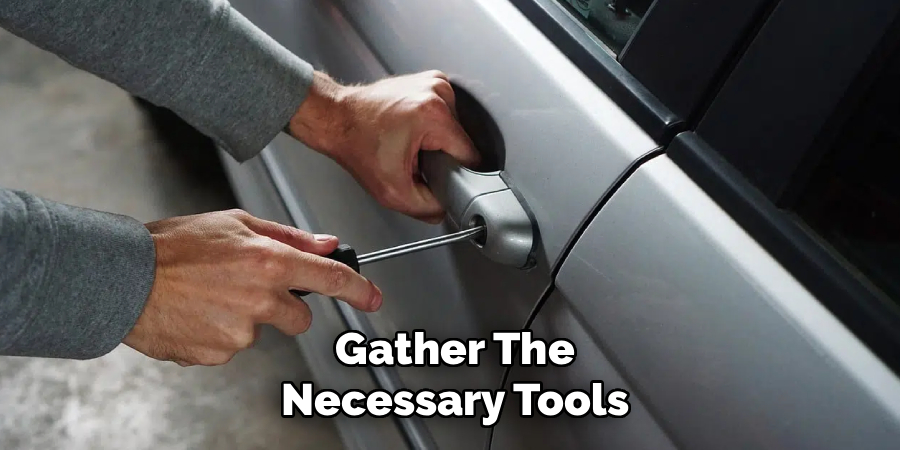
You can find basic lock picking sets online or at specialty hardware stores. For a makeshift solution, a sturdy paperclip or bobby pin can be bent into a pick, and a small, flathead screwdriver can serve as a tension wrench.
Step 2: Insert the Tension Wrench
Take your tension wrench and insert it into the bottom part of the keyway. The keyway is the opening where you would normally insert your key. The goal is to have the wrench situated so you can apply a small amount of turning pressure in the direction you would turn the key to unlock the door. This pressure is the most critical part of the process. Too much force will bind the pins, and too little will not allow them to set. Apply just enough torque to create a slight rotation in the lock cylinder.
Step 3: Understand the Internal Pin Mechanism
Inside a standard pin tumbler lock, there is a series of small pins divided into two segments: key pins (bottom) and driver pins (top), separated by a shear line. Springs push the driver pins down, keeping the lock secured. When you insert the correct key, its unique shape lifts all the pin pairs to the precise height where the separation aligns with the shear line. This alignment allows the cylinder to turn. Your goal with a pick is to manually lift each pin stack to the shear line, one by one.
Step 4: Insert the Pick and Locate the First Pin
With the tension wrench in place and slight pressure applied, gently insert your pick into the top part of the keyway, above the wrench. Slide it all the way to the back of the lock. Now, slowly pull the pick back toward you, gently “raking” or “feeling” the pins as you go. You should be able to feel the individual pins, which will have a slight springiness to them. Your objective is to identify the first “binding pin”—the one that feels more rigid than the others due to the pressure from the tension wrench.
Step 5: Begin to Set the Pins
Once you have located the binding pin, position the tip of your pick underneath it. Apply a slow, gentle upward pressure until you feel or hear a faint “click.” This sound indicates that the upper driver pin has cleared the shear line, and the key pin is resting in place.
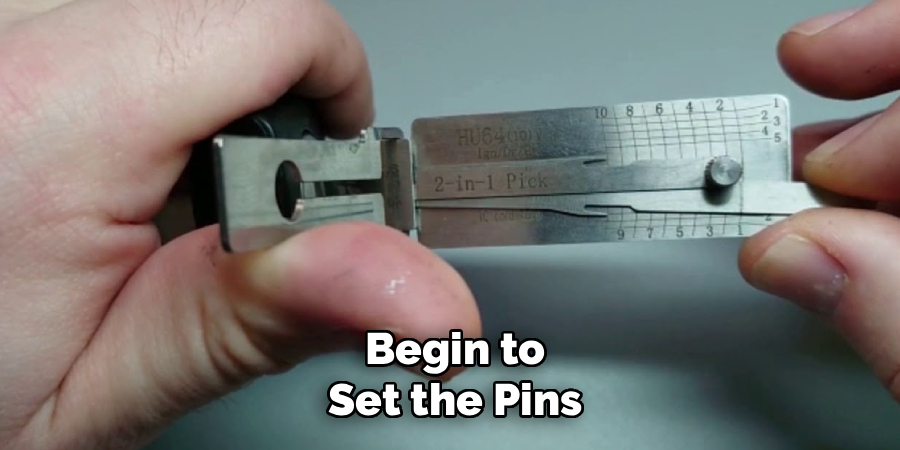
The tension wrench may rotate a tiny bit further when this happens. It is crucial to maintain consistent pressure with the tension wrench throughout this process. If you release the tension, all the set pins will drop back down, and you will have to start over.
Step 6: How to Pick Car Door Lock by Setting Remaining Pins
After setting the first pin, continue to search for the next binding pin. It may not be the one immediately adjacent to the first. Gently probe the remaining pins to find the one that is now resistant to movement. Repeat the process: apply slow, upward pressure with the pick until you feel that subtle click. Continue this method for each pin within the lock. The number of pins can vary, but most car door locks have between five and seven. Patience is key, as you must set each pin individually to the shear line.
Step 7: Apply Final Torque to Open the Lock
Once you have successfully set the last pin, the lock will be ready to open. You will know you have set the final pin because the tension wrench will suddenly rotate freely, as if you have used the key. At this point, simply turn the tension wrench fully in the unlocking direction, and the door mechanism will disengage. The door is now unlocked. If the lock does not turn, it is likely one of the pins was not set correctly or you applied too much force. Release the tension and start again.
Practice and Refine Your Technique
Lock picking is a skill that requires patience and practice to master. After successfully unlocking your first lock, continue practicing on different types of locks to gain experience. Each lock may present unique challenges due to variations in pin arrangements and tension requirements.
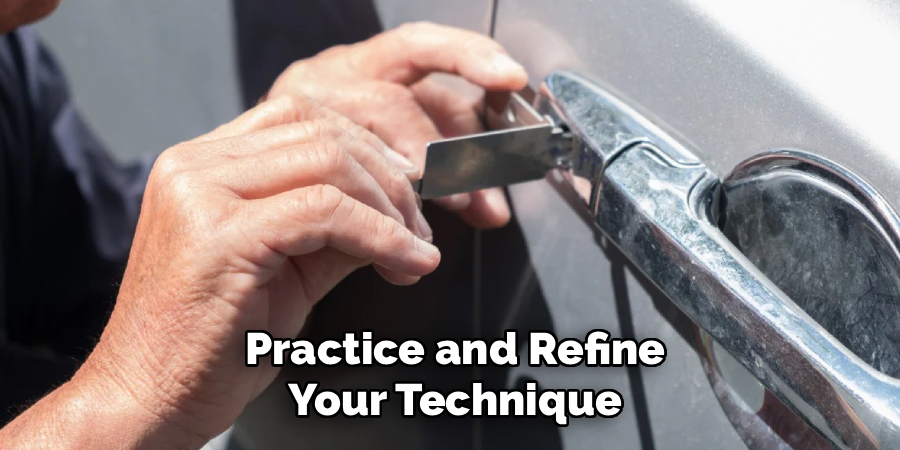
Additionally, always ensure you are practicing legally and only with locks you own or have permission to manipulate. Over time, your technique will improve, and you will develop a better understanding of the subtle feedback provided by the lock.
Frequently Asked Questions (FAQ)
Is It Legal to Own Lock Picking Tools?
In most places, owning lock picking tools is legal. However, laws can vary significantly by state or region. The key factor is often intent. Possessing these tools with the intent to commit a crime is illegal. For educational purposes or for use on your own property, it is generally permissible. Always check your local regulations to ensure you are in compliance with the law before purchasing or carrying a lock pick set.
Can This Method Damage My Car Lock?
If done correctly with a gentle touch, picking a lock should not cause any damage. Damage typically occurs when too much force is applied with either the tension wrench or the pick. Jamming tools into the keyway or aggressively forcing the pins can bend the internal components or break a piece of the tool off inside the lock. Always use minimal pressure and let the tools do the work.
What Is the Difference Between Raking and Single-Pin Picking?
Single-pin picking is the method described in this guide, where you lift each pin individually. Raking is a faster, less precise technique. It involves inserting a “rake” pick and moving it rapidly in and out of the lock while varying the tension. This action is an attempt to bounce all the pins to the shear line at once. While raking can be effective on simpler locks, single-pin picking offers more control and is a better fundamental skill to learn.
Will This Work on All Car Models?
This technique is most effective on older vehicles that use traditional pin tumbler locks. Many modern cars are equipped with more complex locking systems, such as sidebar locks, wafer locks, or electronic systems that cannot be bypassed with traditional picking tools. For newer cars with advanced security features, keyless entry fobs, or transponder keys, calling a professional automotive locksmith is the safest and most effective solution.
What Should I Do if I Cannot Pick the Lock?
If you have tried several times without success, it is best to stop to avoid potential damage. There could be several reasons for the difficulty: the lock may be too complex, your tools may not be suitable, or your technique may need refinement. In this situation, the best course of action is to call a professional locksmith. They have specialized tools and the expertise to open your car door quickly and without damage.
Conclusion
Being locked out of your car is a common problem, but having the knowledge to solve it can turn a crisis into a minor inconvenience. By following the steps outlined in this guide, you can learn the fundamentals of how a lock works and develop a practical skill. The process demands patience, a light touch, and an understanding of the lock’s internal mechanics. While this guide provides the necessary information on how to pick car door lock mechanisms for educational purposes, remember to always use this knowledge responsibly. For more complex locks or if you’re ever in doubt, a professional locksmith is your most reliable option.

About
Robert D is a distinguished figure in the world of Safety Systems and Risk Management, with a decade of expertise creating innovative and sustainable workplace solutions. His professional focus lies in merging traditional safety protocols with modern digital monitoring techniques, fostering environments that are both practical and hazard-conscious. As the lead author of SafetyRift, Robert delves into the art and science of risk mitigation, inspiring safety officers and industry professionals alike to bridge the gap between compliance and culture.
Education
RMIT University (Melbourne, Australia)
Associate Degree in Design (Industrial Safety)
-
Focus on sustainable safety infrastructure, industry-driven risk assessments, and practical implementation.
-
Gained hands-on experience with traditional hazard identification and digital monitoring tools, such as IoT safety sensors and predictive analytics software.
Nottingham Trent University (United Kingdom)
Bachelor’s in Occupational Health and Safety (Honors)
-
Specialized in systemic design with a focus on blending human behavior psychology with modern safety production techniques.
-
Participated in industry-wide projects, working with global logistics and manufacturing firms to gain real-world insights into large-scale safety deployments.
Publications and Impact
In SafetyRift, Robert shares his insights on safety design processes, protective materials, and strategies for efficient, accident-free production. His writing bridges the gap between foundational safety knowledge and modern industrial needs, making it a must-read for both budding safety coordinators and seasoned risk management professionals.