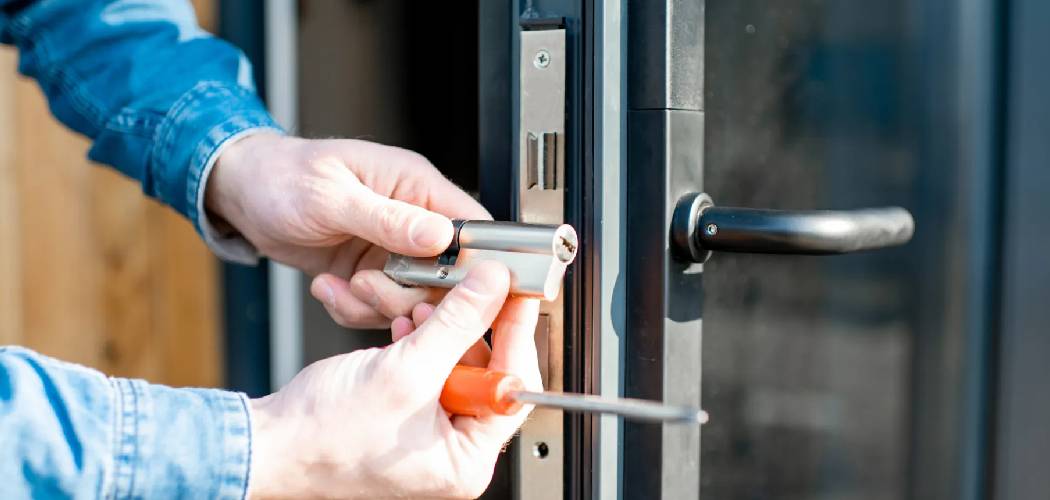
To change a patio door lock, you need to remove the mounting screws on the interior handle, detach the old hardware, insert the new latch, and secure the new handles in place.
The most common reason is a worn-out internal latch that no longer securely catches the door frame, leaving your home vulnerable. Sometimes, dirt, rust, or shifting foundations can also cause the lock to fail. Replacing it is a straightforward process that restores the security of your home.
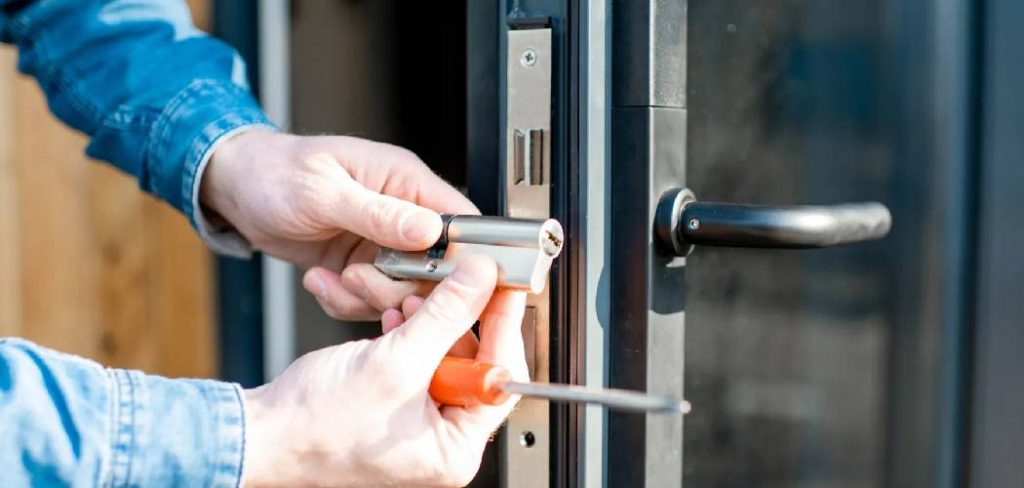
Why Your Patio Door Lock Stops Working
Locks on an exterior patio door endure constant use and changing weather conditions. Over time, the metal components inside the lock housing can bend, rust, or break. If your lock feels stiff, fails to click into place, or the handle wiggles loosely, the internal spring or latch is likely broken. Replacing the entire handle and lock assembly is usually the safest and most effective solution.
Tools and Materials Needed
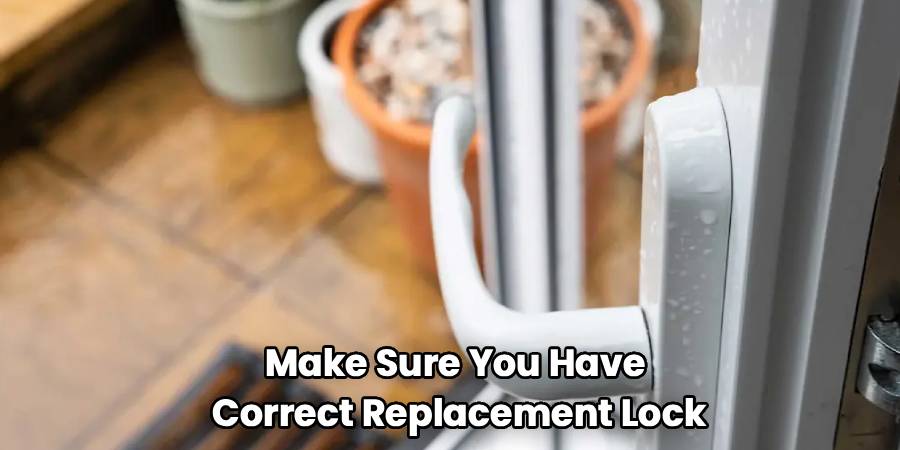
Before you begin, make sure you have the correct replacement lock. Measure the distance between the center of the top screw hole and the center of the bottom screw hole on your current handle. You will need a replacement lock kit that matches this exact measurement.
You will also need:
- A Phillips-head screwdriver
- A flathead screwdriver (for gentle prying)
- A tape measure
- Masking tape (to hold the exterior handle in place)
- Safety glasses
Step-by-Step Instructions: How to Change a Patio Door Lock
Follow these steps to safely replace your lock. Keep your sliding patio door open during this process so you do not accidentally lock yourself out.
Step 1: Secure the exterior handle
Place a piece of masking tape over the exterior handle, taping it to the glass frame. This prevents the heavy metal handle from falling and damaging the glass when you remove the interior screws.
Step 2: Remove the old hardware
Using your Phillips-head screwdriver, unthread the two main screws on the interior handle. Once the screws are out, carefully pull the interior handle away from the door. Then, go outside and carefully remove the taped exterior handle.
Step 3: Remove the latch mechanism
Look at the edge of the door where the lock meets the frame. You will see two small screws holding the latch (the metal hook) in place. Remove these screws and pull the old latch out.
Step 4: Install the new latch
Insert the new latch into the edge of the door, making sure the hook faces the correct direction to grab the frame. Secure it with the provided screws. Start with the safest and simplest check: manually move the latch up and down with your finger to ensure it moves smoothly.
Step 5: Attach the new handles
Place the new exterior handle against the outside of the door. Hold it in place or tape it securely. Align the interior handle on the inside of the door, ensuring the locking lever slides into the latch mechanism. Insert the new mounting screws and tighten them by hand. Do not use a power drill, as over-tightening can crack the glass or strip the screws.
Step 6: Test the lock
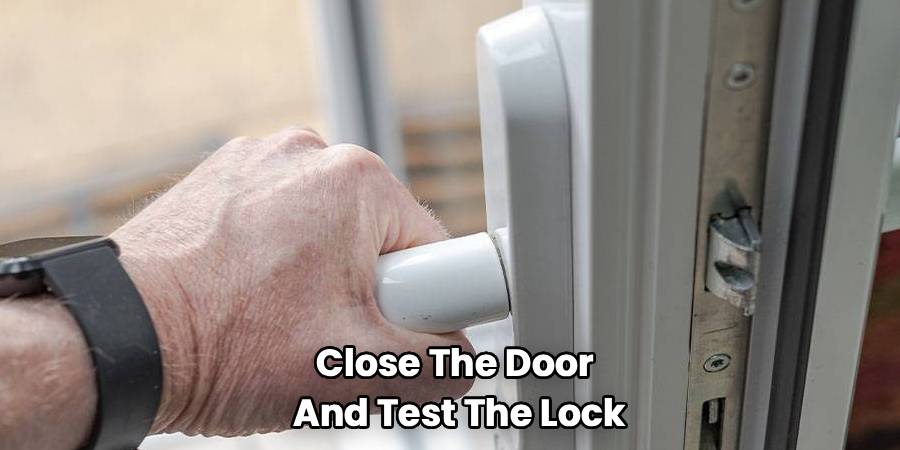
Close the door and test the lock. The hook should easily slide into the strike plate (the metal receiver on the door frame) and hold the door firmly shut. If this does not work, try the next step: adjust the strike plate up or down by loosening its screws and shifting it slightly until the lock lines up perfectly.
Common Mistakes and Troubleshooting
- The screws will not tighten: You may have stripped the threading or used the wrong size screws. Always use the hardware provided in your new lock kit.
- The lock hook hits the frame: The strike plate on the door frame is misaligned. Adjust the strike plate to match the height of your new lock.
- The door is hard to open or close: The rollers at the bottom of your backyard sliding door might be worn out. Changing the lock will not fix a door that is difficult to slide.
Safety Warnings and When Not to DIY
Working with doors involves heavy moving parts and large panels of glass. Always wear safety glasses to protect your eyes from falling screws or metallic dust. Handle all metal hardware carefully so it does not swing and strike the glass panel.
If your home has a wired security system attached to the frame, take precautions. For safety, turn off power before working near automated door sensors or alarm wires.
Do not attempt this repair if your door uses a complex, multi-point locking system built directly into the frame. These systems require specialized knowledge to safely replace.
When to Call a Professional
While replacing a standard surface-mounted lock is manageable for most people, some situations require expert help.
Call a professional if:
- The glass on your door is cracked or loose.
- The door frame is visibly warped, preventing the door from closing fully.
- You have a multi-point locking system that secures the door at the top, middle, and bottom simultaneously.
- You do not feel confident working near large glass panels.
Frequently Asked Questions
Can I replace just the latch instead of the whole handle?
Yes, if you can find the exact matching latch for your specific handle. However, replacing the entire handle and lock assembly is usually easier and ensures all parts work together smoothly.
Are patio door locks universal?
No. While many locks look similar, the distance between the mounting screws varies. Always measure the distance between your existing screw holes before buying a replacement.
Why does my new lock feel loose?
The interior locking lever might not be properly seated inside the latch mechanism. Remove the interior handle and ensure the metal pin lines up correctly with the latch slot before tightening the screws.
How do I make my sliding door more secure?
In addition to a functional primary lock, you can install a secondary security bar or a foot lock at the bottom track to provide extra resistance against forced entry.
Closing Thoughts
A secure lock is your first line of defense. By taking the time to carefully measure, replace, and test the hardware, you can quickly restore the safety of your home. If you encounter unexpected resistance or complex wiring during the process, stop and contact a qualified local locksmith. Your safety always comes first.