You hit the button on your wall, you hear the motor hum, but nothing happens. Or worse, you hear a massive bang that sounds like a firecracker went off inside your garage. Your stomach drops. Is it the opener? The track? Or is it something more serious?
Garage doors are the unsung heroes of our homes. They are heavy, moving walls that we rely on multiple times a day, yet we rarely think about the mechanisms lifting them until something goes wrong. The muscles doing all that heavy lifting aren’t the motor, as most people assume, but the springs. When these high-tension coils fail, your door becomes dead weight—often hundreds of pounds of it.
Identifying the problem early can save you from a trapped car, a burnt-out opener motor, or even a dangerous injury. But unless you are a technician, spotting the signs isn’t always intuitive. In this guide, we are going to walk you through exactly how to know if garage door spring is broken, what specific symptoms to look for, and why you should treat this issue with serious caution.
Step-by-Step Guide on How to Know if Garage Door Spring is Broken
Diagnosing a broken spring doesn’t require you to be a mechanic, but it does require careful observation. Because these systems are under extreme tension, you must conduct your inspection safely. Never attempt to touch the springs or disconnect cables while the door is under tension.
Here is a straightforward, safe process to check your system.
Step 1: Visual Inspection of the Torsion Spring
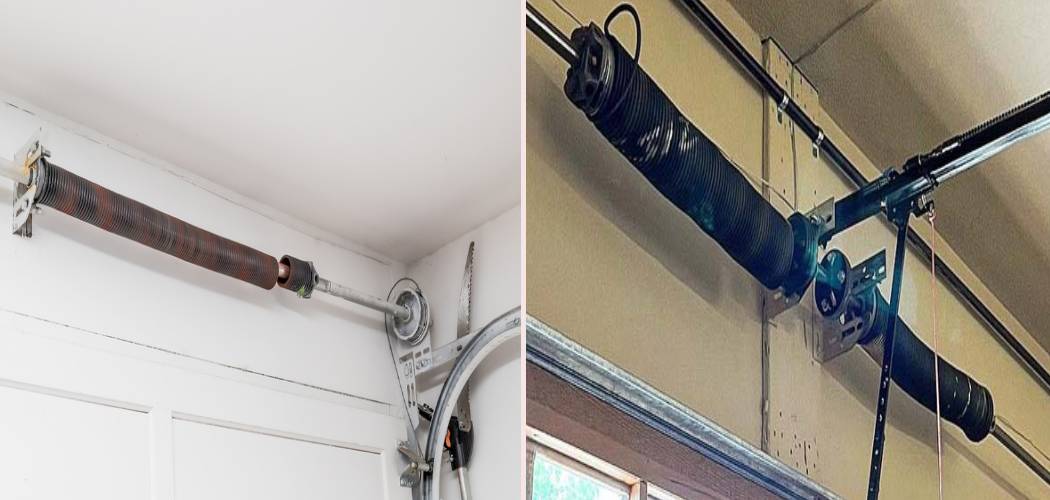
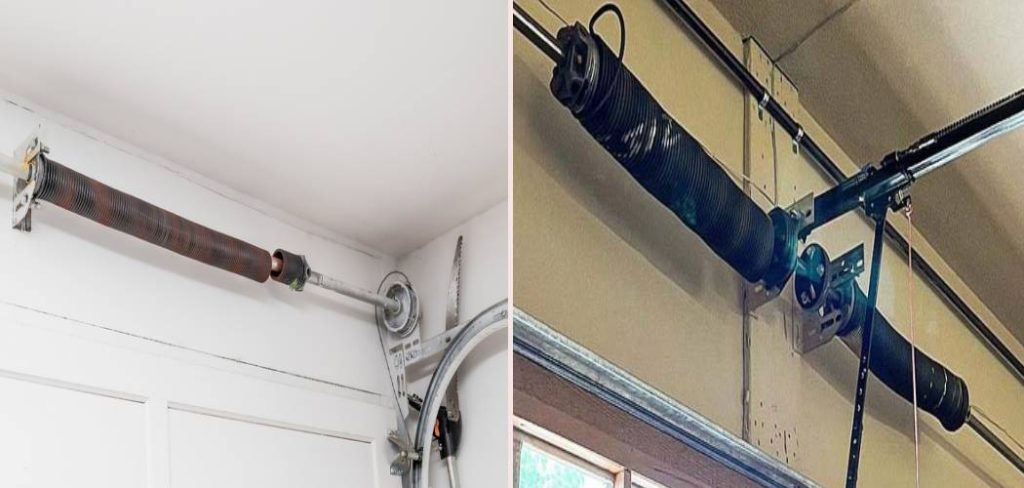
The most common type of residential spring system is the torsion setup. These are the beefy coils located horizontally on a metal shaft right above the door opening. If you have a two-car garage, you likely have one or two of these.
Grab a flashlight and look up at that center bar. A healthy spring should be one continuous coil from left to right. If you see a distinct gap of two or three inches in the middle of the coil, that is the “smoking gun.” When a torsion spring snaps, it unwinds violently and separates. This gap is the most definitive visual proof you will find. If you see this separation, do not try to run the opener again.
Step 2: Check the Extension Springs
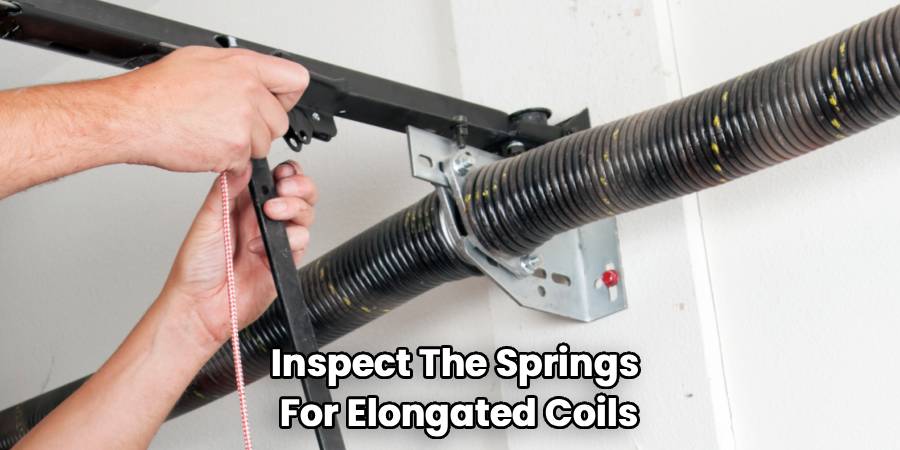
Not all garage doors use torsion springs. Some older doors or specific setups use extension springs. These are long, skinny springs that run parallel to the horizontal tracks on either side of the garage ceiling. They stretch out when the door closes and contract to pull it up.
To check these, look along the sides of the tracks. Inspect the springs for elongated coils, gaps, or severed pieces. Because these springs can fly off when they break, most modern installations include a safety cable running through the center of the spring to keep it contained. If you see a spring hanging loosely by a safety cable or dangling completely detached, you have found your problem.
Step 3: Listen for the “Gunshot” Sound
Many homeowners don’t see the break happen—they hear it. A torsion spring breaking is incredibly loud. Because the metal is wound tight with enough potential energy to lift 300 pounds or more, the release of that energy creates a thunderous BANG.
If you were home and heard a loud noise coming from the garage but found nothing fell off the shelves and no one crashed into the door, a broken spring is the likely culprit. This noise is a classic symptom of a snapped coil.
Step 4: Perform the Emergency Release Test
If you cannot see a break but suspect something is wrong, you can test the door’s balance—but only if the door is currently closed. Never pull the emergency release cord if the door is open, as a broken spring could cause the door to crash down instantly.
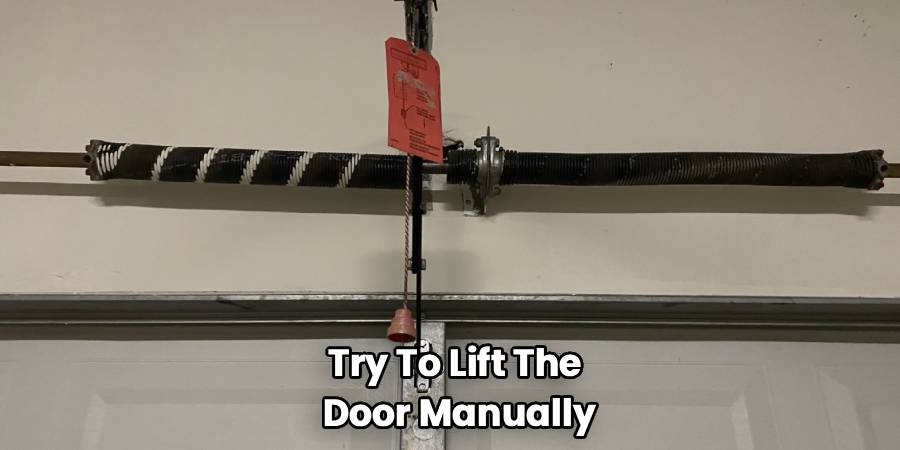
With the door fully closed, pull the red emergency release cord to disconnect the door from the electric opener. Now, try to lift the door manually by the handle.
A properly balanced door with healthy springs should be relatively easy to lift with one hand and should stay in place when you lift it halfway up. If the door feels incredibly heavy—like you are trying to lift a solid wall—or if it slides crashing back down the moment you let go, your springs have failed. This heaviness is a key indicator of how to know if garage door spring is broken when the visual signs aren’t obvious.
Step 5: Watch for Uneven Opening
Sometimes only one spring breaks in a two-spring system. When this happens, the opener might still manage to lift the door, but it will struggle significantly. You might notice the door moving slowly or jerking as it rises.
More tellingly, the door may look crooked as it moves up the track. Since one side has lifting power (the good spring) and the other is dead weight (the broken spring), the door can bind in the tracks. If you see the door “waddling” up the track or getting stuck sideways, stop the opener immediately to prevent damaging the tracks or the rollers.
Step 6: Listen to the Opener Straining
Your electric opener is designed to push and pull a balanced door, not to dead-lift 200 pounds. If your springs are shot, the motor has to do all the work. You might hear the motor humming louder than usual, straining, or making grinding noises.
In many cases, modern openers have force sensitivity features. If the springs are broken, the opener will sense the excess weight and stop lifting after just a few inches, potentially reversing back to the closed position. If your door opens six inches and then gives up, checking the springs should be your first move.
Step 7: Inspect the Cables
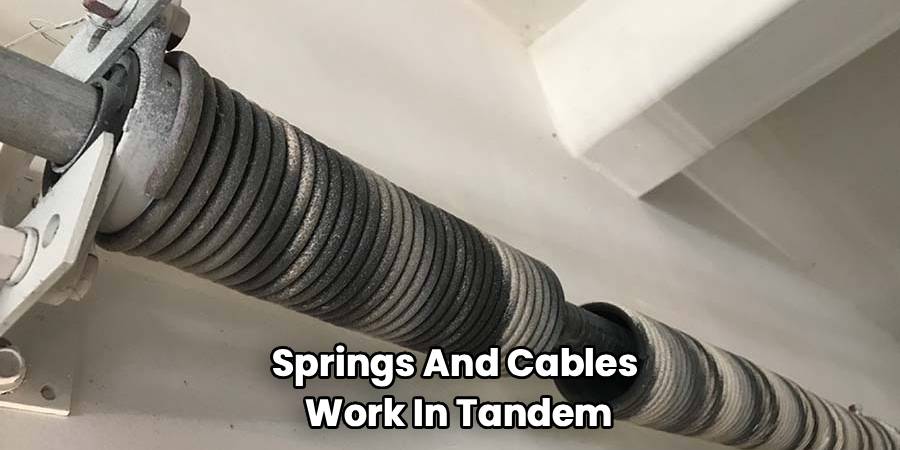
The springs and cables work in tandem. The spring provides the power, and the cables transfer that power to the bottom of the door to lift it. When a spring breaks, the tension on the cables is often lost instantly.
Look at the cables on the drums (for torsion systems) or pulleys (for extension systems). If you see cables that are loose, frayed, or completely disconnected and spaghetti-like on the floor, it is often a secondary symptom of a spring failure. The cables didn’t necessarily break, but without the spring’s tension to keep them tight, they unspooled.
Frequently Asked Questions
Understanding the “why” and “how” of garage door springs can help you make better decisions about repairs and maintenance. Here are the answers to the questions homeowners ask us most frequently.
Can I Open My Garage Door With a Broken Spring?
Technically, you might be able to, but you really shouldn’t. If you have an electric opener, trying to force it to lift a door with a broken spring can strip the internal gears or burn out the motor entirely. Suddenly, a standard spring repair turns into a much more expensive opener replacement.
If you absolutely must get your car out, you can try lifting it manually, but be warned: the door will be extremely heavy. You will likely need two people to lift it safely, and you must prop it open securely with clamps or a sturdy ladder so it doesn’t crash down on you or your vehicle. The safest route is to leave it closed until a pro arrives.
How Long Do Garage Door Springs Typically Last?
Most standard builder-grade garage door springs are rated for 10,000 cycles. One “cycle” is a full open-and-close operation.
If you use your garage door simply to leave for work and come home (2 cycles a day), those springs might last 13 to 14 years. However, most modern families use the garage as the front door. Between kids getting bikes, running errands, and the spouse coming home, you might hit 4-6 cycles a day. In that scenario, springs may only last 5 to 7 years. When replacing them, you can often ask for “high-cycle” springs rated for 20,000 cycles or more, which are worth the investment for longevity.
Why Did My Garage Door Spring Break?
Wear and tear is the biggest factor. Metal fatigues over time from the constant twisting and untwisting (torsion) or stretching and contracting (extension). Eventually, the steel simply gives up.
Rust is another major enemy. If you live in a humid climate or your garage isn’t well-insulated, moisture can build up on the coils. Rust increases friction and weakens the steel, causing it to snap prematurely. Cold weather can also play a role; metal contracts in the cold, making it more brittle, which is why we see a spike in broken springs during the winter months.
How To Know If Garage Door Spring Is Broken vs. The Opener?
This is a classic confusion. If the opener motor runs but the chain or belt moves without the door, it could be a stripped gear in the opener or a disconnected trolley. However, if the motor hums and strains but the door barely moves, it is almost certainly a spring issue.
The emergency release test mentioned earlier is the best way to distinguish between the two. Disconnect the opener. If the door is light and easy to move by hand, your springs are fine, and the problem lies with the opener. If the door is a heavy, immovable object, the springs are broken.
Can I Replace the Springs Myself?
We strongly advise against DIY spring replacement unless you have specific training and the right tools. Torsion springs, in particular, are wound under immense pressure. The winding bars used to tighten them can slip if not handled correctly, resulting in broken hands, facial injuries, or worse.
Extension springs are slightly less dangerous but still pose a risk of flying parts if not secured properly. While we love the DIY spirit, this is one home repair where the risk of injury outweighs the money saved. A professional can typically swap out springs in under an hour, safely and correctly balanced.
Should I Replace Both Springs If Only One is Broken?
Yes, absolutely. If your door has two springs, they were installed at the same time and have lifted the door the same number of cycles. If the right spring snapped this morning, the left spring is living on borrowed time and will likely break within a few weeks or months.
Replacing both at once saves you the cost of a second service call fee and ensures your door remains perfectly balanced. It is the industry standard practice for a reason.
What Is the Difference Between Torsion and Extension Springs?
Torsion springs are the industry standard for modern homes. They are mounted on the wall above the garage door opening. They use torque to lift the door and are generally safer because the spring stays on the shaft when it breaks. They offer a smoother, more controlled motion.
Extension springs are older technology, often found on lighter doors or in garages with low headroom. They run alongside the overhead tracks and stretch out to lift the door. They can be jerkier and require safety cables to prevent them from becoming projectiles when they snap. If you have extension springs, you can often convert to a torsion system for better performance.
The Importance of Routine Maintenance
You can’t prevent springs from breaking forever—metal fatigue is inevitable—but you can extend their lifespan and spot issues before they leave you stranded.
Lubrication is key. Every six months, take a can of garage door lubricant (not WD-40, which is a solvent, not a lubricant) and spray the coils of the springs. This keeps them slick, reducing the friction between the coils as they wind and unwind. This simple 5-minute task can add years to the life of the spring by preventing rust and reducing wear.
While you are there, listen to your door. A healthy door is relatively quiet. If you start hearing excessive squeaking or groaning, it’s a sign that the system is drying out or parts are wearing down.
It’s also smart to check the balance of your door once or twice a year using the emergency release method. If the door starts feeling heavier over time, the springs may be losing tension. A technician can often add a quarter-turn of tension to “re-balance” aging springs, squeezing a bit more life out of them before they need full replacement.
Final Thoughts
A broken garage door spring is a hassle, but it doesn’t have to be a disaster. By paying attention to the sounds your door makes and performing occasional visual checks, you can catch symptoms of faulty garage door springs early.
Remember the golden rule of garage safety: respect the tension. These springs hold hundreds of pounds of energy. While knowing how to know if garage door spring is broken empowers you to diagnose the issue, the repair itself is best left to experienced professionals who can get your door back on track safely.
If your door is heavy, the gap is visible, or the bang was loud, make the call today. Ignoring the signs puts unnecessary strain on your opener and risks the safety of your family. A quick replacement will restore the smooth, silent operation you expect, giving you peace of mind every time you press that button.