You open the fridge after a long day and reach for the leftover cake you were saving. It’s gone. Half the snacks are missing too, and the soda you hid behind the milk has vanished.
Maybe it’s a curious toddler. Maybe it’s a roommate with sticky fingers. Maybe it’s a family member on a strict diet who can’t resist temptation.
Whatever the reason, an unlocked fridge feels like an open invitation.
The good news? Locking a refrigerator is easier than you’d think, and you don’t need to be handy to do it.
In this guide, you’ll learn why people lock their fridges, the main types of refrigerator locks, and exactly how to lock a refrigerato. You’ll also see the mistakes that trip people up — and how to avoid every single one.
Let’s get that fridge secured.
Why You Might Need to Lock a Refrigerator
There’s usually a real story behind a locked fridge. It’s rarely about being controlling. It’s about safety, health, or peace of mind.
Here are the most common reasons people reach for a fridge lock:
- Child safety. Toddlers love to explore. An open fridge means spilled jars, broken glass, or a kid climbing shelves like a ladder.
- Diet and medical needs. If someone in your home is managing diabetes, an eating disorder, or a strict meal plan, a lock removes the temptation.
- Shared spaces. Dorms, offices, and shared apartments turn fridges into free-for-alls. A lock protects what’s yours.
- Medication storage. Some medicines live in the fridge. A lock keeps them away from kids and pets.
- Dementia care. For caregivers, a lock can prevent a loved one from overeating or eating spoiled food they forgot about.
Notice the pattern. Each reason ties back to protecting a person, not just food.
In short: you lock a refrigerator to protect someone you care about — a child, a patient, or yourself.
Types of Refrigerator Locks
Before you buy anything, you need to know your options. Each type of refrigerator lock solves a slightly different problem.
Some are quick peel-and-stick fixes. Others need a little more effort but hold much stronger. Let’s walk through them.
Adhesive Strap Locks
These are the most popular choice for a reason. A strap lock uses two adhesive pads — one on the fridge door, one on the body. A strap connects them with a buckle or latch.
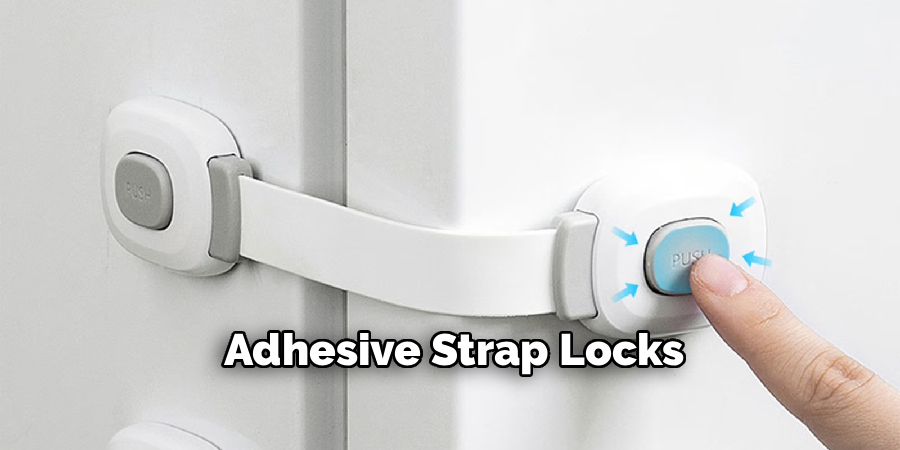
They’re cheap, need no tools, and install in minutes. The trade-off is strength. A determined adult can pull them loose over time.
Best for: child safety and low-stakes situations.
Combination or Keyed Locks
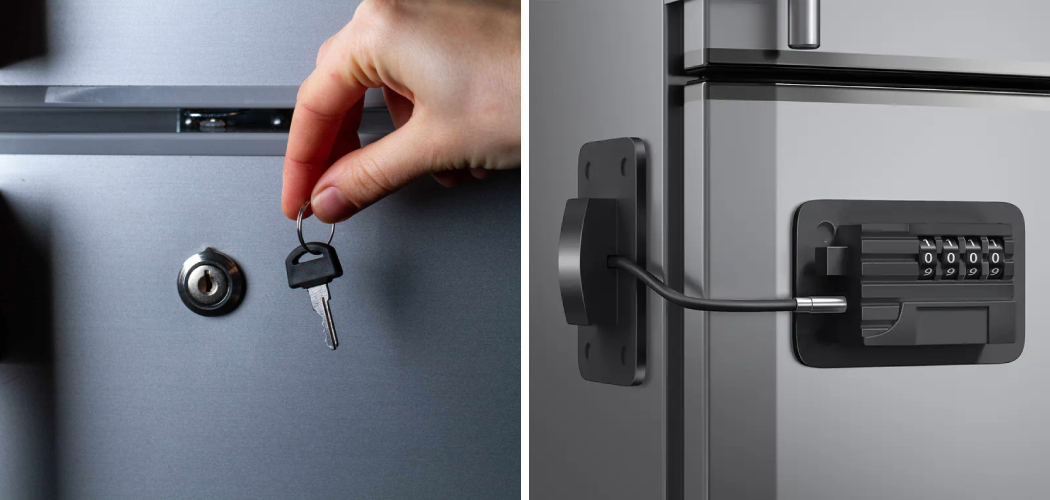
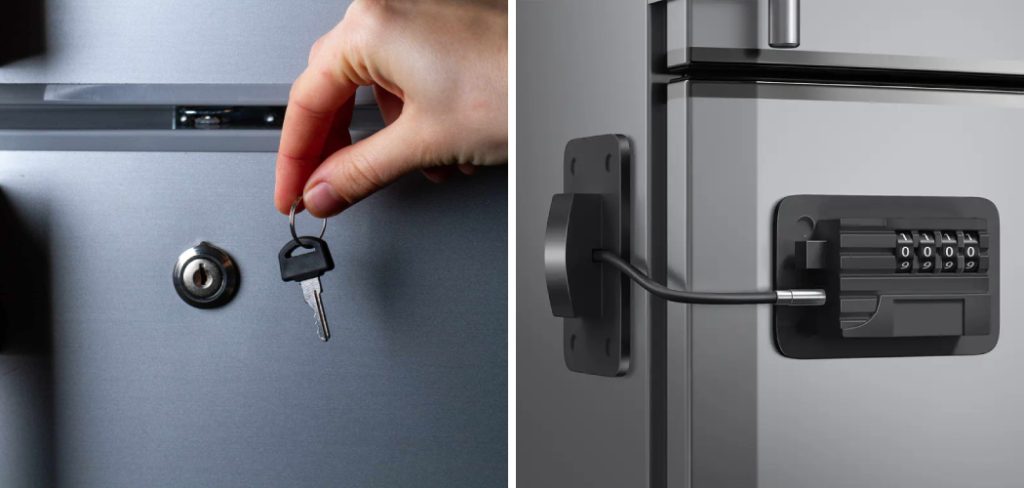
Want real security? A keyed or combination lock gives it. These often use a stronger cable or a locking bar that only opens with a code or key.
They cost more and take longer to set up. But they stop teens, roommates, and adults who know how a simple strap works.
Best for: shared fridges, medication, and diet control.
Cable Locks
A cable lock wraps a steel cable around the fridge or through the handles, then locks with a padlock or combination. It’s flexible and works on odd-shaped units.
The downside is looks. A cable looped around your fridge isn’t pretty, and it can scratch the finish.
Best for: mini-fridges, garages, and temporary setups.
Magnetic Locks
A magnetic lock hides inside or on the door and releases with a magnetic key. Kids can’t see it, so they can’t figure it out.
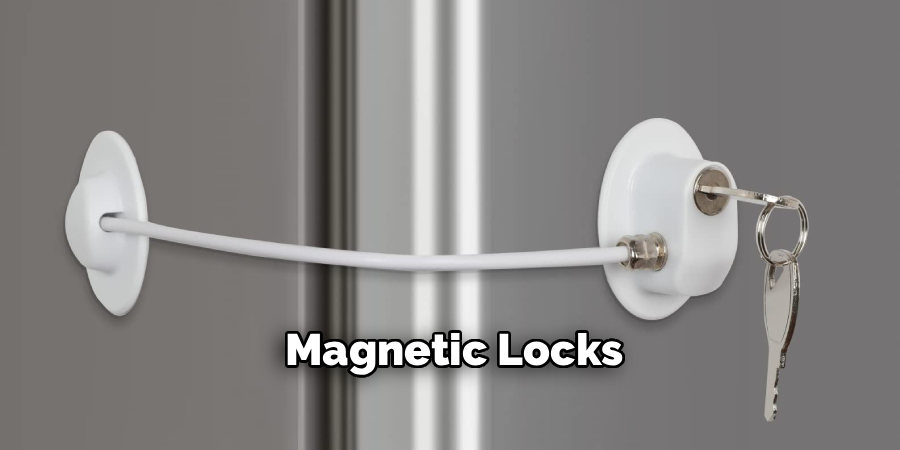
These need careful placement and sometimes drilling. But they’re nearly invisible and hard for little hands to beat.
Best for: stealth child-proofing.
Comparison Table: Refrigerator Lock Types
| Lock Type | Security Level | Ease of Install | Best For |
| Adhesive Strap Lock | Low–Medium | Very easy (no tools) | Toddlers and quick fixes |
| Combination/Keyed Lock | High | Medium | Shared fridges, diet control |
| Cable Lock | Medium–High | Easy | Mini-fridges, garages |
| Magnetic Lock | Medium | Medium (may need drilling) | Hidden child-proofing |
The right pick depends on who you’re locking out. A toddler needs something they can’t grip. A snack-sneaking adult needs something they can’t outsmart.
In short: match the lock’s strength to the person you’re trying to keep out.
What You’ll Need Before You Start
A smooth install starts with the right prep. Most fridge locks come as a full kit, but it helps to have a few things ready.
Here’s your checklist:
- The lock kit you chose, with all straps, screws, or cables.
- Rubbing alcohol and a cloth to clean the surface.
- A tape measure to position the lock evenly.
- A pencil or marker for placement marks.
- A drill and bits — only if your lock needs screws or is magnetic.
- The key or combination code, set aside somewhere safe.
One thing matters more than any tool: a clean, dry surface.
Adhesive locks fail on greasy or dusty fridges. Kitchen grime builds up fast, and it kills the sticky bond. Wipe the spot down with rubbing alcohol and let it dry fully before you stick anything.
Warning: Never install a lock on a wet or freshly cleaned surface. Trapped moisture weakens the adhesive within days.
In short: grab your kit, clean the surface well, and keep your key or code somewhere you won’t forget.
Step-by-Step: How to Lock a Refrigerator
Here’s the heart of what you came for. We’ll start with the most common type — the adhesive strap lock — then cover the others. Follow the steps in order and don’t rush the drying time.
Installing an Adhesive Strap Lock
This is the easiest method and works on most fridges.
- Pick your spot. Choose a flat area where the door meets the body. Avoid curved edges and the rubber door seal.
- Clean both surfaces. Wipe with rubbing alcohol and let them dry for a few minutes.
- Mark your placement. Hold the strap in place and mark where each adhesive pad will sit. Make sure both pads line up straight.
- Peel and press. Remove the backing from the first pad and press it firmly onto the fridge door. Hold for 30 seconds.
- Attach the second pad. Line up the strap, peel the second pad, and press it onto the fridge body. Hold again.
- Let it cure. Here’s the part people skip. Wait at least 24 hours before using the lock. The adhesive needs time to fully bond.
- Test it. After curing, buckle the strap and give the door a gentle tug. It should hold firm.
Installing a Keyed or Combination Lock
For stronger security, follow these steps.
- Clean and dry the mounting area, just like above.
- Position the two lock halves so they meet cleanly when the door is shut.
- If it’s adhesive, press and hold each half, then wait 24 hours.
- If it’s screw-mounted, mark the holes, drill pilot holes, and screw the lock in place.
- Set your combination code or test your key.
- Lock it, then pull the door to confirm it holds.
Warning: Write your combination down and store it away from the fridge. Locking yourself out of your own food is a real and frustrating problem.
Installing a Cable Lock
Cable locks are great for mini-fridges and odd shapes.
- Wrap the steel cable through both handles, or around the whole unit if there are no handles.
- Pull the cable snug, but not so tight it bends the doors.
- Feed the ends into the padlock or combination lock.
- Lock it and test the tension.
Installing a Magnetic Lock
Magnetic locks take the most care but hide the best.
- Decide whether the lock mounts on the surface or inside the door panel.
- Mark placement so the lock and its catch align perfectly.
- Attach with strong adhesive or screws, following the kit’s guide.
- Test the magnetic key several times to be sure it releases smoothly.
In short: clean, position, mount, wait for the adhesive to cure, then test before you trust it.
Different Scenarios for Locking a Refrigerator
Not every fridge situation is the same. Here’s how to match your approach to your real-life need.
Locking a Fridge for Toddlers
Kids are fast and curious. Go with an adhesive strap lock placed high, out of their reach.
Position it above their eye level so they can’t study how it works. Two locks — one high, one low — add extra protection for climbers.
Locking a Shared or Office Fridge
Roommates and coworkers need a real deterrent. A combination lock or cable lock works best here.
Choose combination over keyed so you don’t lose a tiny key at work. Share the code only with people you trust.
Locking a Mini-Fridge or Dorm Fridge
Small fridges often have no good flat surface. A cable lock looped through the handle is your friend.
It’s removable, needs no drilling, and won’t upset a landlord or dorm rule about damage.
Locking a Fridge for Diet or Medical Reasons
This one needs sensitivity. A lock here supports a person’s health goals, so pick something firm but not shaming.
A keyed lock kept by a caregiver or partner works well. It removes the constant temptation without a struggle each time.
In short: pick your lock based on who you’re protecting and where the fridge lives.
Common Mistakes and Troubleshooting
Even a simple fridge lock can go wrong. Here are the mistakes people make most, why they happen, and how to fix each one.
Mistake 1: The Adhesive Won’t Stick
You press the pad on, and it peels off within a day.
Why it happens: The surface was greasy, dusty, or damp. Kitchen fridges collect a thin oily film you can’t always see.
The fix: Remove the lock, scrub the spot with rubbing alcohol, and let it dry fully. Then reapply and wait the full 24 hours before use. Skipping the cure time is the number one cause of failure.
Mistake 2: Placing the Lock on the Rubber Seal
You stick the pad on the door gasket, and it either falls off or ruins the seal.
Why it happens: The rubber seal flexes every time the door opens. Adhesive can’t grip a moving, soft surface.
The fix: Always mount locks on the hard, flat panel — never the rubber gasket. A damaged seal also lets cold air escape and raises your energy bill.
Mistake 3: Losing the Key or Forgetting the Code
You lock the fridge, then can’t get back in.
Why it happens: People store the key on the fridge itself or trust their memory with the code.
The fix: Write the combination on paper and store it in a drawer far from the kitchen. For keyed locks, keep a spare key somewhere safe. Never leave the key taped to the fridge — that defeats the whole purpose.
Mistake 4: The Lock Scratches the Fridge
You remove a cable lock later and find scratches on the finish.
Why it happens: Bare steel cables and hard buckles rub against the metal surface.
The fix: Use a cable with a soft plastic coating, or wrap a cloth where the cable touches the fridge. For adhesive locks, test removal with a hair dryer to soften the glue and avoid peeling paint.
Mistake 5: A Strong Adult Pulls the Lock Off
You install a strap lock, but a determined person yanks it loose.
Why it happens: Strap locks are built for little hands, not adult strength.
The fix: Upgrade to a keyed, combination, or cable lock. Match the lock’s strength to the person you’re keeping out, not just the easiest option on the shelf.
Mistake 6: The Lock Blocks the Door From Sealing
The door won’t shut fully once the lock is on, and your food starts to spoil.
Why it happens: The lock was mounted too close to the door edge or too thick for the gap.
The fix: Reposition the lock so it clears the door’s closing path. Check that the door still seals tight by closing it on a slip of paper — if the paper pulls out easily, the seal is loose.
Frequently Asked Questions
How do I lock a refrigerator without drilling?
Use an adhesive strap lock or a cable lock. Strap locks stick right onto the fridge with strong pads, while cable locks wrap around the handles or body. Both hold well and leave no permanent marks, which makes them perfect for renters and dorms.
What’s the best lock for a fridge to stop kids?
An adhesive strap lock placed high, out of a toddler’s reach, works best. Kids can’t grip or study a lock they can’t see or touch. For climbers, add a second lock so they can’t beat it by standing on a shelf.
Can I lock a mini-fridge or dorm fridge?
Yes. A cable lock looped through the handle is the easiest option for small fridges. It needs no drilling, comes off cleanly, and won’t break any dorm rules about damaging furniture.
Will a fridge lock damage my refrigerator?
It shouldn’t, if you install it right. Keep locks off the rubber door seal, use coated cables to avoid scratches, and soften adhesive with a hair dryer before removing it. Done carefully, most locks leave no lasting marks.
How do I get into a locked fridge if I forget the code?
Check where you stored your written combination or spare key first. If you’re fully locked out, most cable and combination locks can be cut with bolt cutters as a last resort. To avoid this, always keep your code or key somewhere safe and separate from the fridge.
Wrapping Up
A raided fridge or a curious toddler doesn’t have to be your daily worry. As you’ve seen, locking a refrigerator is a small project you can finish in an afternoon.
You’ve learned why people lock their fridges, the main lock types, and how to install each one step by step. You’ve also seen the mistakes that trip people up — and how to dodge every one.
The key takeaway is simple: match the lock to the person, clean the surface well, and give the adhesive time to cure.
Grab your lock kit and give it a go. You’ve got this.
Want to childproof the rest of your kitchen too? Check out our guide on [related topic: baby-proofing cabinets and drawers] next.

About
Robert D is a distinguished figure in the world of Safety Systems and Risk Management, with a decade of expertise creating innovative and sustainable workplace solutions. His professional focus lies in merging traditional safety protocols with modern digital monitoring techniques, fostering environments that are both practical and hazard-conscious. As the lead author of SafetyRift, Robert delves into the art and science of risk mitigation, inspiring safety officers and industry professionals alike to bridge the gap between compliance and culture.
Education
RMIT University (Melbourne, Australia)
Associate Degree in Design (Industrial Safety)
-
Focus on sustainable safety infrastructure, industry-driven risk assessments, and practical implementation.
-
Gained hands-on experience with traditional hazard identification and digital monitoring tools, such as IoT safety sensors and predictive analytics software.
Nottingham Trent University (United Kingdom)
Bachelor’s in Occupational Health and Safety (Honors)
-
Specialized in systemic design with a focus on blending human behavior psychology with modern safety production techniques.
-
Participated in industry-wide projects, working with global logistics and manufacturing firms to gain real-world insights into large-scale safety deployments.
Publications and Impact
In SafetyRift, Robert shares his insights on safety design processes, protective materials, and strategies for efficient, accident-free production. His writing bridges the gap between foundational safety knowledge and modern industrial needs, making it a must-read for both budding safety coordinators and seasoned risk management professionals.