Electric scooters have become a convenient and fun way to navigate city streets, but their popularity also makes them a prime target for theft. Nothing ruins a day faster than coming back to find your ride missing. Learning the proper techniques to secure your property is just as important as knowing how to ride safely.
This guide is designed to take the guesswork out of security, ensuring your investment stays exactly where you left it. Whether you are running a quick errand or parking overnight, understanding how to lock a scooter effectively is an essential skill for every owner. We will walk you through the process, making sure you have the confidence to park anywhere.
Locking Your Scooter Matters
Leaving your scooter unsecured, even for a “quick minute,” is a gamble that rarely pays off. Theft is a crime of opportunity, and an unlocked vehicle is an open invitation to thieves. Beyond the obvious financial loss of replacing the unit, there is the inconvenience of being stranded without your primary mode of transportation. Furthermore, many insurance policies require proof of proper locking mechanisms to process a theft claim.
Securing your ride acts as a visual deterrent; thieves usually look for the easiest target and will likely bypass a well-secured vehicle for one that is vulnerable. Taking the time to secure your scooter protects your wallet, your schedule, and your peace of mind, ensuring your ride is ready whenever you are.
7 Step Methods Guide on How to Lock a Scooter
Step 1: Choose the Right Locking Mechanism
Before you even approach a bike rack, the first step is selecting a high-quality lock that suits your specific security needs. Not all locks are created equal, and relying on a flimsy cable lock alone is often a mistake. U-locks are generally considered the gold standard because their rigid structure makes them difficult to cut with bolt cutters.
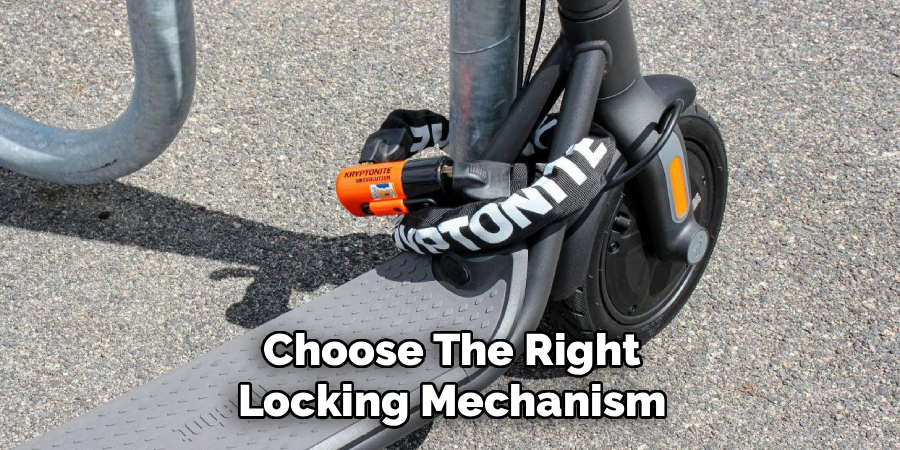
Alternatively, heavy-duty chain locks offer flexibility and strength, though they can be heavier to carry. Folding locks are another popular option because they are compact and easy to transport while offering decent protection. Evaluate where you typically park and choose a lock with a high security rating to ensure maximum resistance against attacks.
Step 2: Identify a Secure and Permanent Anchor Point
Finding the right place to lock your scooter is just as critical as the lock itself. You need to look for an immovable object that is cemented into the ground, such as a designated bike rack, a metal railing, or a street sign post.
Avoid objects that can be easily unscrewed, lifted, or cut, like wooden fences or short poles where the lock could be lifted over the top. Check the stability of the anchor point by giving it a firm shake before attaching your vehicle. If the object you are attaching to is weak or loose, even the strongest lock in the world will not prevent theft.
Step 3: Position the Lock Through the Frame
The most effective way to secure your ride is to thread the lock through a non-removable part of the scooter’s frame. Many scooters have unique designs, so you might need to look for a specific locking point near the folding mechanism or the deck neck.
Avoid locking through the wheels alone, as wheels can often be removed with simple tools, leaving the rest of your scooter vulnerable to theft. Ideally, you want to capture the main stem or the deck area within the lock’s shackle. This ensures that a thief cannot simply disassemble a minor part to free the main body of the vehicle.
Step 4: Minimize the Slack in the Lock
When you are attaching your lock, it is vital to keep the fit as tight as possible against the anchor point and the scooter. Leaving too much empty space inside the U-lock or chain provides room for a thief to insert tools like hydraulic jacks or pry bars.
By positioning the lock tightly, you make it incredibly difficult for anyone to get enough leverage to break the mechanism. If you are using a U-lock, try to fill the interior space with the scooter stem and the post. This technique of tight positioning is a subtle but powerful detail that significantly increases the difficulty of breaking the lock.
Step 5: Keep the Lock Off the Ground
A common mistake many beginners make is allowing their lock, especially heavy chains, to rest on the pavement. When a lock is on the ground, thieves can use the floor as an anvil to smash the lock with a hammer. To prevent this, always position your locking mechanism high up on the post or rack.
This positioning makes it awkward for a thief to attack the lock and prevents them from using their body weight or the ground for leverage. Suspending the lock in the air forces a thief to work against gravity, which is much harder and more conspicuous.
Step 6: Secure Removable Components
If your scooter has easily removable parts like a battery, display screen, or seat, you need to take extra precautions. Quick-release levers are convenient for you, but they are also convenient for thieves. If you plan to leave your scooter for an extended period, take these accessories with you.
If that is not possible, consider using a secondary cable lock to weave through these components and secure them to your main lock. This layering of security measures makes your scooter a much more time-consuming and hassle-filled target, which is usually enough to deter casual opportunistic thieves who want a quick grab.
Step 7: Double Check Your Work Before Leaving
Once you have secured everything, take a moment to physically tug on the lock and the scooter to ensure everything is engaged correctly. Sometimes a lock might look closed but hasn’t actually clicked into place, or the anchor point might be looser than you thought.
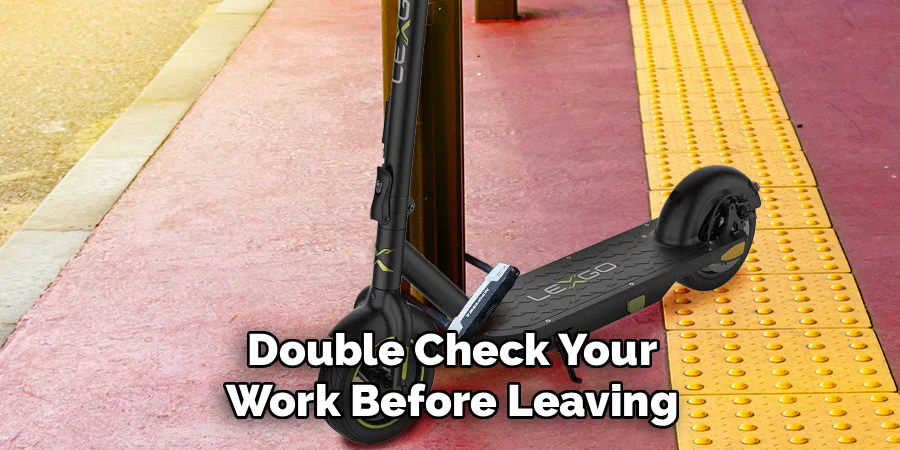
A quick physical check confirms that the mechanism is fully latched and the scooter is firmly attached to the immovable object. This final verification takes only a few seconds but can save you from a devastating loss. Knowing exactly how to lock a scooter involves this final step of vigilance to ensure your efforts weren’t in vain.
Frequently Asked Questions
What Is The Best Type Of Lock For An Electric Scooter?
The best lock is typically a high-quality U-lock or a heavy-duty chain lock made of hardened steel.
- U-Locks: Offer a great balance of security and portability. Look for smaller shackles to reduce leverage points.
- Chain Locks: Provide flexibility for locking around wider posts but are heavier.
- Disc Brake Locks: Good as secondary security but shouldn’t be used alone.
Avoid thin cable locks as your primary security, as they can be cut easily.
Can I Use A Cable Lock As My Main Security Device?
No, relying solely on a cable lock is generally not recommended for electric scooters. While they are lightweight and easy to carry, cable locks are notoriously easy to cut with basic hand tools like wire cutters or bolt cutters. They are best used as a secondary measure to secure wheels or accessories to your main U-lock or chain lock, adding an extra layer of difficulty for thieves without being the primary defense.
Where Is The Safest Place To Park My Scooter?
The safest place is a high-traffic, well-lit area with plenty of visibility.
- Avoid secluded alleys or dark corners where thieves can work unseen.
- Use designated bike racks whenever possible.
- Park near security cameras or building entrances for added deterrence.
Visibility is your friend; thieves prefer not to operate where they can be easily watched by pedestrians or security personnel.
How Can I Protect My Scooter Battery From Theft?
If your scooter has a removable battery, the safest option is to unlock it and take it with you. Since batteries are expensive components, they are high-value targets. If taking it with you isn’t feasible, ensure your battery compartment locks securely. You can also use a secondary cable lock threaded through the battery handle (if applicable) and connected to your main lock, making it much harder to snatch quickly.
Is It Worth Getting An Alarm Or GPS Tracker?
Yes, adding electronic security measures can be very effective. An audible motion-sensor alarm can draw attention if someone tampers with your ride, scaring them off. A GPS tracker, such as an AirTag or a dedicated scooter tracker hidden inside the frame, helps you locate the vehicle if it gets stolen. These tools work best when combined with a strong physical lock, creating a multi-layered defense system.
Conclusion
Securing your personal transport doesn’t have to be a complicated ordeal, but it does require the right equipment and a bit of know-how. By choosing a robust lock, identifying solid anchor points, and following a consistent routine, you drastically reduce the risk of theft. Remember that the goal is to make your vehicle the least attractive target on the block. We hope this guide on how to lock a scooter empowers you to ride freely, knowing your scooter will be safe and sound right where you left it.

About
Robert D is a distinguished figure in the world of Safety Systems and Risk Management, with a decade of expertise creating innovative and sustainable workplace solutions. His professional focus lies in merging traditional safety protocols with modern digital monitoring techniques, fostering environments that are both practical and hazard-conscious. As the lead author of SafetyRift, Robert delves into the art and science of risk mitigation, inspiring safety officers and industry professionals alike to bridge the gap between compliance and culture.
Education
RMIT University (Melbourne, Australia)
Associate Degree in Design (Industrial Safety)
-
Focus on sustainable safety infrastructure, industry-driven risk assessments, and practical implementation.
-
Gained hands-on experience with traditional hazard identification and digital monitoring tools, such as IoT safety sensors and predictive analytics software.
Nottingham Trent University (United Kingdom)
Bachelor’s in Occupational Health and Safety (Honors)
-
Specialized in systemic design with a focus on blending human behavior psychology with modern safety production techniques.
-
Participated in industry-wide projects, working with global logistics and manufacturing firms to gain real-world insights into large-scale safety deployments.
Publications and Impact
In SafetyRift, Robert shares his insights on safety design processes, protective materials, and strategies for efficient, accident-free production. His writing bridges the gap between foundational safety knowledge and modern industrial needs, making it a must-read for both budding safety coordinators and seasoned risk management professionals.