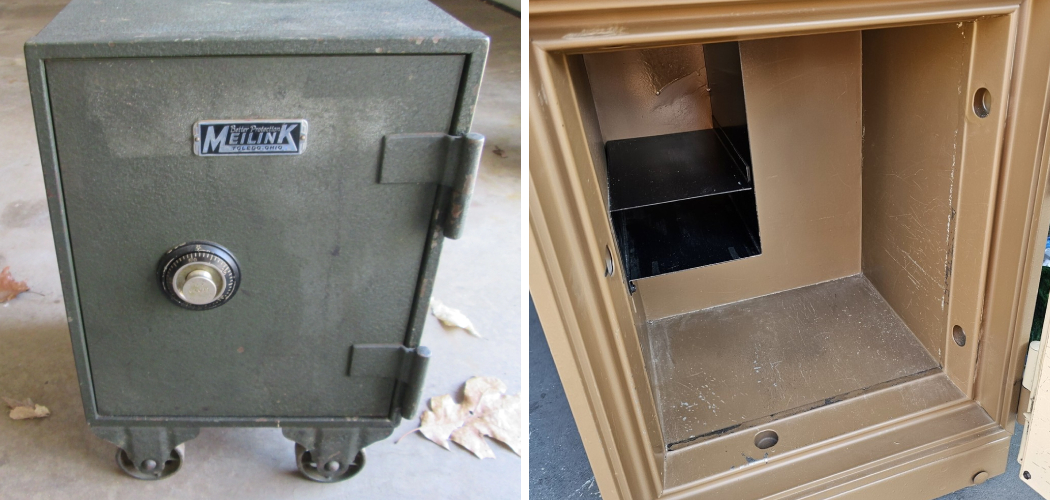
Finding an old Meilink safe in your home or inheriting one can be an exciting discovery. These sturdy containers often hold sentimental value or perhaps just the mystery of what is inside. However, the excitement quickly fades if you realize you don’t know the combination or the dial seems stuck. Dealing with a locked steel box can feel intimidating, but you don’t necessarily need to be a professional locksmith to gain access. With patience and the right approach, many owners can retrieve their belongings successfully.
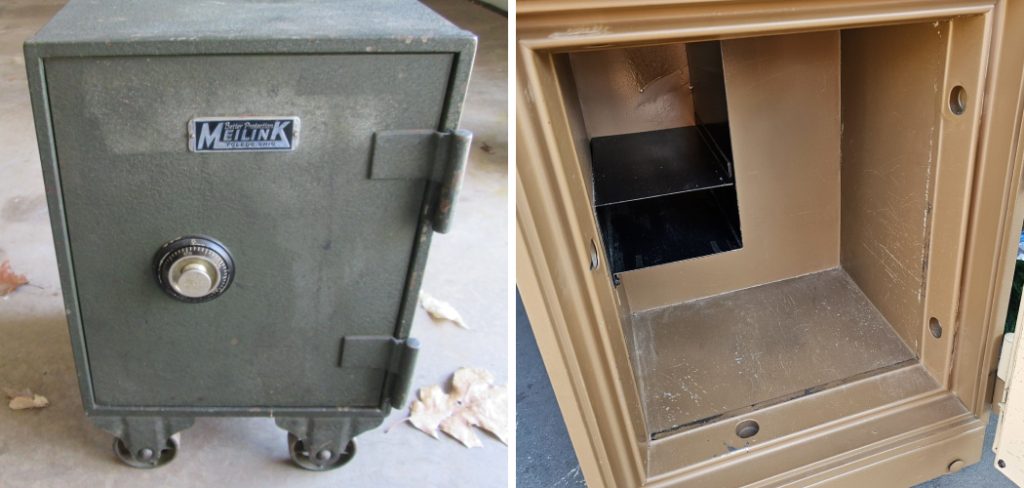
This guide is designed to help you navigate the process without damaging your property. We will walk you through the standard operating procedures and troubleshooting methods. Whether you have lost the code or are just learning the mechanics, understanding how to open a meilink safe is simpler than it appears. Let’s get that door open so you can finally see what treasures or important documents have been waiting for you.
Understanding the Durability of Meilink Safes
Meilink safes are renowned for their incredible durability and fire resistance. Founded in the late 19th century, the Meilink company built a reputation for manufacturing steel safes that could withstand intense heat and physical tampering. For many homeowners, these units serve as a reliable fortress for family heirlooms, important deeds, and cash. Because they were built to last for decades, it is very common to find models from the 1950s or even earlier still in working condition today.
This extreme durability is a double-edged sword when you are locked out. The heavy steel walls and complex locking mechanisms that kept burglars out a century ago are now keeping you out. Understanding the build quality is crucial before you attempt to open it. These are not flimsy lockboxes that can be easily pried open with a screwdriver. Respecting the mechanism is key. Rushing the process or using excessive force usually results in a permanently broken lock rather than an open door. Patience is your best tool here.
9 Step-by-Step Guide on How to Open a Meilink Safe
Step 1: Locate the Contact Mark and Index Ring
Before you begin spinning the dial, you need to familiarize yourself with the anatomy of your lock. Look closely at the dial ring surrounding the rotating dial. You should see two distinct marks at the top. The mark at the very center top is called the “opening index” or “contact mark.” This is the primary reference point you will use for dialing the combination.
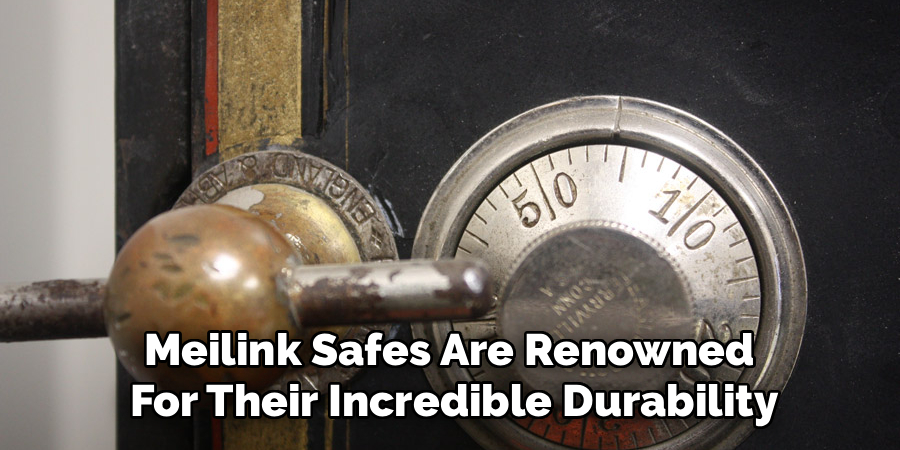
There might be another mark to the side, known as the “changing index,” which is only used when resetting the combination. For opening the unit, ignore the changing index entirely. Ensure the dial moves freely and isn’t obstructed by rust or debris. If it is dirty, a quick wipe with a dry cloth will help you see the numbers clearly. Do not use liquid lubricants like WD-40 directly on the dial, as this can gum up the internal tumblers over time.
Step 2: Clear the Lock Mechanism Completely
To ensure you are starting from a neutral position, you must clear the lock’s internal tumblers. This effectively resets the mechanism so you aren’t fighting against previous partial turns. Start by spinning the dial to the left (counter-clockwise). You need to turn it at least four full revolutions. This action aligns all the wheels inside the lock pack, preparing them for the correct sequence.
It does not matter what number you stop on initially, as long as you have completed those four full turns. Many beginners skip this step, assuming the lock is ready to go, which leads to failed attempts. Think of this like clearing a calculator screen before starting a new math problem. Once you have spun it four times to the left, you are ready to input the first number of your combination.
Step 3: Dialing the First Number
Now that the lock is cleared, you can begin entering the specific code. Turn the dial to the left (counter-clockwise) again. You need to pass the first number of your combination exactly three times. On the fourth time, stop precisely on the number. It is critical that you align the number exactly with the opening index mark at the top of the ring.
If you overshoot the number even by a little bit, you cannot simply reverse the dial to correct it. Reversing the direction engages different gears inside the lock. If you make a mistake and go past your target number, you must start the entire process over from Step 2. Precision is vital here. Move the dial slowly as you approach the number to ensure you land right on the mark.
Step 4: Dialing the Second Number
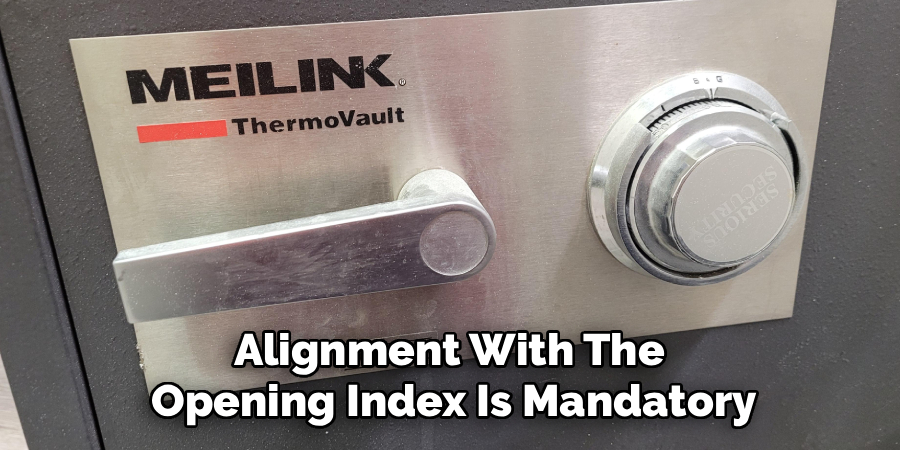
Once the first number is set, you must change direction. Turn the dial to the right (clockwise). For this step, you need to pass the second number of your combination exactly two times. On the third time the number comes around, stop directly on it. Just like before, alignment with the opening index is mandatory for the tumblers to fall into the correct “gate.”
Watching the numbers spin can be hypnotic, so maintain your focus. Count the passes out loud if it helps you keep track. Remember, you are passing the number twice and stopping on the third appearance. This alternating direction (Left-Right-Left) is standard for most mechanical safe locks. Keep your hand steady and avoid jerky movements, which might disturb the internal alignment you just established with the first number.
Step 5: Dialing the Third Number
You are now nearing the end of the sequence. Change direction again, turning the dial to the left (counter-clockwise). Pass the third number of your combination once. On the second time the number reaches the top index mark, stop dead on it. At this stage, the internal wheels should be aligning perfectly to allow the fence (a small metal bar inside) to drop into the wheel gates.
If you are learning how to open a meilink safe for the first time, this is often where mistakes happen because users forget to switch directions or lose count of the passes. Take a deep breath before this step. You are turning left, passing the number once, and stopping on the second time. If you feel resistance or a click, do not force it yet; just ensure the number is perfectly aligned.
Step 6: Final Turn to Unlock
With all three numbers dialed in correctly, the internal mechanism should be aligned. Now, turn the dial slowly to the right (clockwise). You are not looking for a specific number here; you are looking for the mechanism to engage. As you turn, the dial should eventually come to a complete stop or you will feel significant resistance, usually around the numbers 90 to 0 on the dial, though this varies by model.
This physical stop indicates that the bolt work has retracted. If the dial spins freely forever without stopping, the combination was likely entered incorrectly, and you will need to restart. Once the dial stops, the internal bolt is retracted. Hold the dial in this position if necessary, although usually, it will stay in place.
Step 7: Engaging the Handle
Locate the handle on the door. Depending on your specific Meilink model, this might be a lever, a T-handle, or a wheel. Apply pressure to turn the handle. Usually, you will turn it clockwise or counter-clockwise depending on the design. If the combination was correct and the dial stopped as expected, the handle should move, retracting the heavy locking bolts from the door frame.
You might hear the satisfying sound of heavy steel moving. If the handle feels jammed or only moves a fraction of an inch, check that the dial is still in the fully unlocked position. Sometimes the dial can slip slightly, re-engaging the lock. Keep firm pressure on the dial’s stop point while trying the handle again.
Step 8: Opening the Safe Door
Pull the door open. It will be heavy. Meilink safes are constructed with thick steel and fire-resistant insulation, making the door significantly heavier than a standard cabinet door. Swing it open carefully to avoid pinching fingers or hitting nearby furniture. If the door feels stuck even though the handle turned, it might be due to the seals sticking from age. Over decades, the fire seal or paint can become tacky, gluing the door shut.
In this case, pull firmly on the handle while giving the door a few sharp bumps with the palm of your hand near the edge. Do not use a pry bar, as this can damage the seal. Once open, extend the bolts (by turning the handle back) while the door is open to prevent accidentally locking it again while you inspect the interior.
Step 9: Troubleshooting a Stuck Dial
If you followed the sequence perfectly but the safe won’t open, mechanical issues might be to blame. Older safes often suffer from “drift,” where the correct numbers have shifted slightly due to wear on the gears. Try the combination again, but add or subtract one digit from each number (e.g., if the number is 20, try 19 or 21).

This technique acts like fine-tuning an old radio station. Additionally, if the dial feels gritty, the lubricant inside may have dried out. While you cannot easily fix this from the outside without professional help, oscillating the dial back and forth rapidly (called “running the numbers”) before trying the combination again can sometimes loosen stuck tumblers. If these methods fail, the lock may have experienced a mechanical failure requiring professional drilling.
What to Do If You Have No Combination
Finding a locked safe without a code is a common scenario. Before calling a locksmith, search the immediate area thoroughly. Previous owners often hid the combination in obvious places to avoid forgetting it themselves. Check the top, bottom, or back of the safe itself for written numbers. Look inside desk drawers in the same room, or check the margins of books on nearby shelves.
Often, the combination is written in a discreet way, like a phone number or a date. If you have the serial number (usually stamped on the front or side), you may be able to contact a professional locksmith who can retrieve the original factory combination from a database, provided the lock hasn’t been changed. This is much cheaper than having the safe drilled open.
Frequently Asked Questions (FAQ)
What Is The Standard Dialing Sequence For Meilink?
The standard sequence for most Meilink mechanical locks follows a specific pattern: Left, Right, Left. Specifically, you turn Left (counter-clockwise) four times to clear, then Left passing the first number three times, stopping on the fourth. Next, turn Right passing the second number twice, stopping on the third. Finally, turn Left passing the third number once, stopping on the second. Finish by turning Right until the dial stops.
Can I Reset The Combination Myself?
It is technically possible but not recommended for beginners. Meilink safes typically use a change key inserted into the back of the lock mechanism (inside the door). To change the combination, you must have the door open and possess the correct change key. One mistake during the resetting process can leave the safe permanently locked open or shut, requiring a locksmith to fix it.
How Do I Find The Serial Number?
The serial number is usually located in one of three places. Check the front of the door near the Meilink logo or dial ring. If not there, check the right-hand side of the safe body or the top corners. Sometimes, a metal tag is riveted to the back of the safe. This number is crucial for locksmiths to retrieve lost combinations.
Why Is My Correct Combination Not Working?
Several factors could cause this. You might be dialing too fast, causing the tumblers to miss the gates. The lock might be dirty or dry, causing internal friction. Also, the combination might have “drifted” over time due to wear. Try dialing the numbers 0.5 or 1 digit higher or lower than your written combination to account for mechanical wear.
Is A Meilink Safe Fireproof Or Burglary Proof?
Most vintage Meilink safes were primarily designed for fire protection rather than burglary protection. While they are made of steel, their main feature is the fire-resistant insulation between the walls. They offer decent protection against opportunistic theft but are not rated for high-security commercial burglary attempts like modern TL-rated safes.
Conclusion
Successfully gaining access to your secured valuables is a satisfying moment that requires patience and precision. We have covered the essential background of these durable units, detailed the specific dialing protocols, and offered solutions for when things go wrong. Remember, these mechanisms are precision instruments; force is rarely the answer. By following the steps carefully—clearing the dial, counting your turns, and aligning your numbers perfectly—you greatly increase your chances of success.
Now that you understand the process, take a deep breath and give it a try. If you treat the lock gently and follow the sequence, you will likely hear that rewarding click of the bolt retracting. Go ahead and use this guide on how to open a meilink safe to unlock your container today. Whether it contains important family history or just empty shelves, the peace of mind of having access is worth the effort. Good luck