Your RV is your home on wheels, a personal sanctuary wherever you travel. Ensuring it feels safe and secure is a top priority, especially at night or when you’re parked in an unfamiliar area. While most RVs come with standard locks, understanding the different ways to secure your space from within can provide significant peace of mind. Learning how to lock RV door from inside is a fundamental skill for any RVer, from the weekend warrior to the full-time nomad. This guide will walk you through various methods, from using the built-in mechanisms to adding extra layers of security, ensuring you can relax and enjoy your adventures with confidence.
Why Securing Your RV Door is Essential
Beyond the obvious benefit of keeping unwanted intruders out, properly securing your RV door from the inside contributes to your overall sense of well-being. A securely locked door is your first line of defense, whether you’re boondocking in a remote location or settled into a busy campground. It protects not only your valuables but also your personal safety. For families traveling with children, a reliable interior lock prevents little ones from wandering out unnoticed. Furthermore, a well-secured door can help brace against strong winds and weather, reducing rattles and drafts. Taking these simple security measures allows you to sleep soundly and fully immerse yourself in the freedom of the RV lifestyle.
7 Step-by-Step Guide on How to Lock RV Door From Inside
Step 1: Examine Your Existing Lock Mechanism
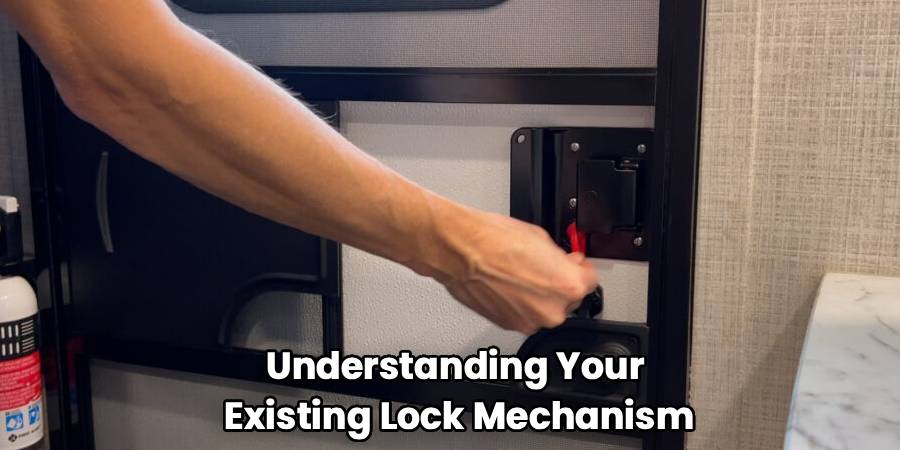
Before adding new hardware, start by understanding what you already have. Most RV doors are equipped with a latch assembly that includes two locks: a handle lock and a deadbolt. The handle lock is typically a simple push-button or small lever, while the deadbolt offers more robust security. Locate the thumb-turn lever on the interior side of your door. This lever directly controls the deadbolt. When you turn it, a solid metal bolt should extend from the door into the doorframe. Familiarize yourself with its operation. Test both the handle lock and the deadbolt to ensure they engage smoothly and feel secure.
Step 2: Engage the Built-in Deadbolt
The primary method for securing your door from the inside is using the integrated deadbolt. This is your strongest built-in defense. To engage it, simply rotate the thumb-turn lever located on the interior plate of your lockset. You should feel a solid “thunk” as the bolt slides into the strike plate on the doorframe. Always make it a habit to use the deadbolt, not just the handle lock, whenever you are inside for the night or want added security. The handle lock is convenient for brief stops but is not designed to withstand significant force. The deadbolt provides real protection.
Step 3: Check the Screen Door Latch
Many RVs have a two-part door system: the main exterior door and an inner screen door. The screen door often has its own small plastic slide or lever for locking. While this lock is not meant for high security, it serves a purpose. It keeps the screen door shut, preventing it from swinging open and allowing insects inside. It also adds a minor but useful barrier. Some screen doors have a small sliding panel that allows you to reach the main door’s handle without unlatching the screen. Make sure this small latch is engaged when you are settled in for the evening.
Step 4: Consider a Portable Security Bar
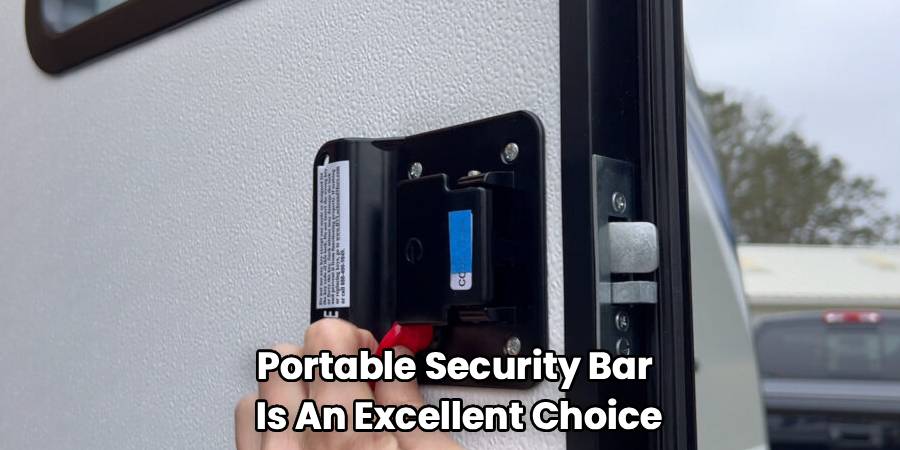
For a significant security upgrade without permanent modifications, a portable security bar is an excellent choice. These adjustable bars are designed to brace under the doorknob and against the floor, using leverage to prevent the door from being forced open. They are inexpensive, easy to use, and require no installation. To use one, simply adjust its length, position the V-shaped yoke under the door handle, and plant the rubberized foot firmly on the floor. This method adds a strong physical blockade, making it extremely difficult for anyone to gain entry from the outside.
Step 5: Install a Flip Lock or Swing Bar Lock
A classic and effective solution is adding a residential-style flip lock or swing bar lock. You have likely seen these in hotels. A flip lock is a simple hinged latch that flips over into a catch on the doorframe, while a swing bar has a bar that slides into a U-shaped keeper. Both are easy to install with just a few screws and provide a visible, reliable secondary lock. This addition is a simple way to answer the question of how to lock RV door from inside with more certainty. They offer a strong visual deterrent and physically stop the door from opening more than a crack.
Step 6: Use an RV Door Security Latch
Several products are designed specifically for RVs, such as the “Lockin’ Chock” or other similar devices. These are typically small, durable pieces of metal or hard plastic that are inserted into the existing latch mechanism on the doorframe. Once the door is closed, the device blocks the latch from being retracted, effectively jamming the door shut from the inside. They are simple to use, require no tools or installation, and can be removed in seconds. This is a great, non-permanent option for renters or anyone hesitant to drill into their RV.
Step 7: Add a Keyless Entry System
For a modern, high-tech solution, consider upgrading to a keyless entry lock. While the primary benefit is convenience from the outside, most of these systems also feature robust interior locking mechanisms. They often come with a larger, more secure deadbolt and a solid metal housing. From the inside, they operate with a sturdy thumb-turn, just like a standard deadbolt. The advantage is that the entire assembly is often built to a higher security standard than the factory-installed locks, providing a more secure feeling overall and completing your knowledge of how to lock RV door from inside.
Test the Lock Thoroughly
Once you have installed or adjusted the lock, it’s essential to test it thoroughly to ensure everything operates correctly. Close the RV door and lock it from the inside using the thumb-turn mechanism. Check for any sticking, misalignment, or unusual resistance. Then, unlock and relock the door several times to confirm smooth functionality. Conduct the same test from the outside with the key to verify that the lock engages and disengages without any issues. Ensuring proper operation reinforces both your safety and the durability of the locking system.
Install Any Additional Features or Accessories
If your RV door lock came with additional features or accessories, such as a keyless entry keypad or remote control, now is the time to install and configure them. Follow the manufacturer’s instructions carefully to ensure proper setup. Test all additional features to confirm they are functioning correctly. For keyless entry, be sure to program your preferred access code and verify that it works smoothly. If a remote control is included, check its range and responsiveness. These additional features can enhance convenience and provide added security for your RV.
Frequently Asked Questions
What is the most secure way to lock an RV door from the inside?
The most secure method combines multiple layers. Start by engaging the built-in deadbolt. Then, add a secondary device like a portable security bar braced under the handle or install a residential-style flip lock. This creates redundancy, making it significantly harder for anyone to force the door open. A keyless entry system upgrade can also provide a more robust primary lock.
Can I install a regular house deadbolt on my RV door?
While it is possible, it is not always recommended. RV doors are much thinner than standard residential doors, and their core is often made of foam insulation rather than solid wood. Installing a house deadbolt may require significant modification and could compromise the door’s structural integrity. It is often better to use security products designed specifically for RVs.
Are portable door locks effective for RVs?
Yes, portable locks and security bars are very effective. They are designed to use leverage and the strength of the floor to prevent a door from being opened. Because they are not permanently installed, they are a perfect solution for travelers who want to add security without drilling holes. They are also easy to store and can be deployed in seconds.
How can I secure my RV door if the lock is broken?
If your main lock is broken, you should get it repaired as soon as possible. In the meantime, you can use a portable security bar or a door jammer as a temporary solution. You could also use a heavy-duty strap to wrap around the interior grab handle and a fixed point inside the RV, but this is a less secure, last-resort option.
Should I lock the screen door from the inside?
Locking the screen door latch is a good practice, but it should not be your only line of defense. The small plastic latch on a screen door is not designed for security. Its main purpose is to keep the screen from swinging open and to keep bugs out. Always engage your main door’s deadbolt for real security.
Conclusion
Knowing the different ways to secure your RV gives you the power to protect your mobile home and travel with greater peace of mind. From fully utilizing the factory-installed deadbolt to adding simple, effective aftermarket devices like security bars and flip locks, you have many options. Each layer of security you add contributes to a safer and more relaxing experience on the road. Now that you understand how to lock RV door from inside, you can confidently make your rig a secure fortress, allowing you to focus on the adventure that awaits just outside your door.

About
Robert D is a distinguished figure in the world of Safety Systems and Risk Management, with a decade of expertise creating innovative and sustainable workplace solutions. His professional focus lies in merging traditional safety protocols with modern digital monitoring techniques, fostering environments that are both practical and hazard-conscious. As the lead author of SafetyRift, Robert delves into the art and science of risk mitigation, inspiring safety officers and industry professionals alike to bridge the gap between compliance and culture.
Education
RMIT University (Melbourne, Australia)
Associate Degree in Design (Industrial Safety)
-
Focus on sustainable safety infrastructure, industry-driven risk assessments, and practical implementation.
-
Gained hands-on experience with traditional hazard identification and digital monitoring tools, such as IoT safety sensors and predictive analytics software.
Nottingham Trent University (United Kingdom)
Bachelor’s in Occupational Health and Safety (Honors)
-
Specialized in systemic design with a focus on blending human behavior psychology with modern safety production techniques.
-
Participated in industry-wide projects, working with global logistics and manufacturing firms to gain real-world insights into large-scale safety deployments.
Publications and Impact
In SafetyRift, Robert shares his insights on safety design processes, protective materials, and strategies for efficient, accident-free production. His writing bridges the gap between foundational safety knowledge and modern industrial needs, making it a must-read for both budding safety coordinators and seasoned risk management professionals.