
Losing the key to your office storage can be an incredibly frustrating experience, especially when important documents are trapped inside. Before you consider drilling out the cylinder or prying the drawers open with a crowbar, take a deep breath. There is a much simpler, non-destructive solution available to you. Most standard office furniture uses relatively simple mechanisms that are perfect for beginners to learn on.

Learning how to pick a file cabinet lock can save you both money on locksmith fees and the cost of replacing damaged furniture. This guide is designed to be completely beginner-friendly, walking you through the process using simple tools you likely already have lying around your home or office. By following these instructions carefully, you will be able to regain access to your files without causing any permanent damage to the hardware.
Why You Should Learn to Unlock Office Furniture
Understanding the mechanics behind basic locks is not just about getting into a locked box; it is about self-reliance and solving everyday problems efficiently. Many people find themselves in possession of second-hand filing cabinets bought from auctions or thrift stores that often come without keys. Rather than rendering the purchase useless or paying a professional more than the cabinet is worth, having this skill allows you to restore functionality immediately.
Furthermore, in an office environment, keys are frequently misplaced during moves or staff changes. Being the person who can calmly open a locked drawer to retrieve a critical contract saves the day and prevents panic. This knowledge also helps you understand the level of security your current storage provides. Once you realize how easily these standard mechanisms can be bypassed, you might be motivated to upgrade to more secure storage for your truly sensitive valuables.
Step-by-Step Guide on How to Pick a File Cabinet Lock
Step 1: Identify the Lock Type and Mechanism
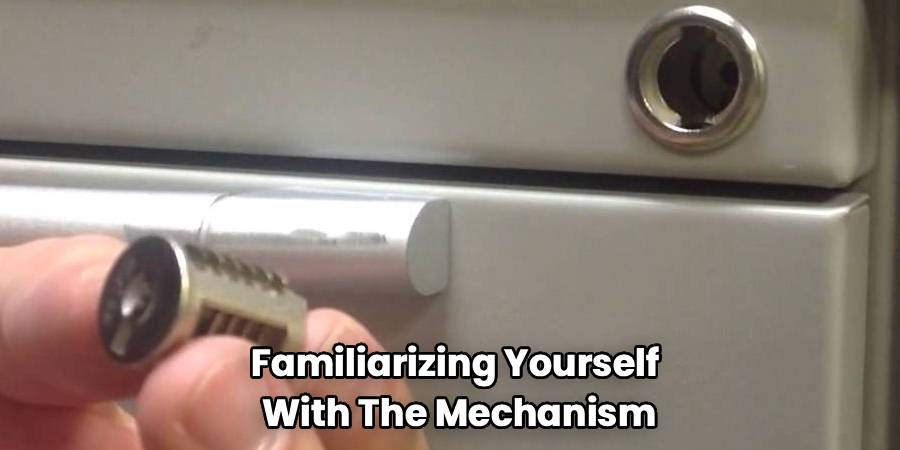
Before you attempt any picking, you need to understand exactly what you are working with. Most standard file cabinets utilize what is known as a wafer lock or a simple pin tumbler lock. Take a close look at the keyhole. If you see a small, rectangular shutter or a simple slot, it is likely a wafer lock, which is common in office furniture.
These are generally easier to manipulate than high-security door locks because they have wider tolerances and fewer internal components. You should also check if the lock is currently in the locked position by gently trying the handle. Understanding the orientation of the cylinder helps you visualize which way the core needs to turn. Familiarizing yourself with the mechanism prevents you from applying force in the wrong direction later.
Step 2: Gather Your Improvised Picking Tools
If you do not have a professional lock picking set, you will need to fashion your own tools from common household items. The two essential components you need are a tension wrench and a pick. Metal paperclips are the most accessible option for this task, specifically the larger, uncoated variety. You will need two of them.
Do not use plastic-coated clips as the coating makes them too thick to fit into the keyhole and dulls the feedback you need to feel from the lock. Alternatively, bobby pins can work if you remove the rubber tips. The goal is to have stiff, thin wire that can be bent into shape but is strong enough to withstand the pressure of turning the lock core and lifting the internal pins without snapping inside the mechanism.
Step 3: Fashion the Tension Wrench
The tension wrench is arguably the most critical tool in this process because it applies the rotational force needed to hold the pins in place once they are set. To make one, take your first paperclip and straighten out the outer loop. Then, using a pair of pliers or your fingers, bend about half an inch of the end 90 degrees.
This small bent section is what you will insert into the bottom of the keyhole. It needs to be short enough not to hit the pins at the back but long enough to grip the cylinder wall. If the wire is too flimsy, fold the paperclip in half before bending the end to create a double-thickness tool. This added rigidity will give you much better control over the rotation of the lock core.
Step 4: Create the Raking or Picking Tool
Now you must create the tool that will actually manipulate the internal locking mechanism. Take your second paperclip and straighten out the long leg, leaving a small curve or bump at the very end. This shape is often referred to as a “rake” or a “hook” in professional terms. You can gently hammer the end flat if you have the means, which helps it slide under the pins more easily, but the round wire will work for standard cabinet locks.
The tip should not be too long, or it will get stuck at the back of the lock. The objective is to create a small implement that can reach all the way to the back of the keyhole and lift the wafers or pins up and down freely. When you are learning how to pick a file cabinet lock, having a properly shaped pick makes a significant difference in your success rate.
Step 5: Insert the Tension Wrench Correctly
Place the bent end of your tension wrench into the bottom of the keyhole, which is also called the shear line. You want to position it so that it does not obstruct the upper part of the hole where your pick needs to operate. Apply a very slight rotational pressure in the direction that the key would naturally turn to unlock the cabinet.
Usually, this is clockwise, but it can vary, so try to remember how the key worked if you ever used it. The amount of pressure is crucial here. Think of it as the amount of force required to press a key on a computer keyboard. If you push too hard, you will bind the pins so tightly they cannot move. If you push too lightly, the pins will fall back down as soon as you lift them.
Step 6: Insert the Pick and Locate the Pins
With your tension wrench applying steady, light pressure, insert your picking tool into the upper part of the keyhole. Push it all the way to the back of the lock mechanism. You should be able to feel the springs of the pins or wafers pushing back against the tool. Gently lift the tool up and down as you slowly pull it out towards you.

This technique is often called “scrubbing” or “raking.” You are trying to catch the pins and lift them to the shear line. Focus on the tactile feedback traveling through the paperclip. You are feeling for stiff resistance or a small click, which indicates you are interacting with the locking mechanism properly.
Step 7: Apply the Raking Technique
Continue the scrubbing motion while maintaining that crucial light tension on the wrench. Move the pick back and forth, dragging it across the pins from back to front. You might hear small clicking sounds, which is a very good sign. These clicks indicate that the pins are finding their set position at the shear line.
As you manipulate the pins, you might feel the plug rotate slightly under your tension wrench. This false set means you are making progress. It is important not to rush this part. If you get frustrated and apply too much force, you might over-set the pins, pushing them too high. If you suspect this has happened, release the tension completely to let the pins drop and start the process over from the beginning.
Step 8: Manipulate Stubborn Pins Individually
If raking alone does not open the lock after a minute or two, switch to single pin picking. Insert your pick and feel for each individual pin or wafer. Push on them one by one. You are looking for the pin that resists the most, which is known as the “binding pin.” Push this binding pin up gently until you feel a distinct click and the tension wrench turns a fraction of a millimeter further.
Once that pin is set, move to the next one that feels stiff. This method requires more patience than raking but is often more effective for slightly more secure cabinets. Many people struggle with how to pick a file cabinet lock simply because they rely solely on luck rather than methodically hunting for the binding pin that is preventing the rotation.
Step 9: Turn the Core and Open the Drawer
As you set the final pin, you will feel a sudden lack of resistance on the tension wrench. The cylinder will rotate freely, allowing you to turn the lock fully to the open position. Maintain the pressure on the wrench to complete the turn. Sometimes the latch can be a bit sticky even after the lock is picked, so you may need to wiggle the drawer handle or the cabinet door while turning the core.
Once the mechanism has clicked open, you can remove your tools. Be careful when pulling the paperclips out so you do not accidentally lock the cylinder again before opening the drawer. Take this opportunity to tape the latch open or remove the lock core entirely so you do not get locked out again.
Frequently Asked Questions
Is It Legal To Pick A Lock?
In most jurisdictions, owning lock picking tools and picking locks is perfectly legal as long as you are the owner of the lock or have explicit permission from the owner. It becomes illegal if you attempt to pick a lock on property that does not belong to you. Always ensure you have the right to access the file cabinet before you begin the picking process to avoid legal trouble.
Can I Use A Knife Or Scissors Instead?
While you might see this in movies, using a knife or scissors is generally not recommended for beginners. These items are often too large to fit properly into the delicate keyway of a file cabinet lock and can cause permanent damage to the mechanism. Using improper tools increases the risk of snapping metal inside the lock, which would then require drilling to remove. Stick to paperclips or bobby pins.
How Long Does It Take To Pick A Cabinet?
The time it takes varies significantly depending on your skill level and the condition of the lock. A simple wafer lock on a budget file cabinet can often be raked open in under thirty seconds by someone with experience. However, for a beginner learning the feel of the tension, it might take anywhere from five to twenty minutes of trial and error. Patience is the most important factor.
Will Picking The Lock Break It?
If done correctly with the proper amount of gentle tension, picking a lock is a non-destructive method of entry. It simply mimics the action of a key and should not damage the internal components. However, applying excessive force or using tools that are too large and aggressive can scratch the pins or damage the springs. If you are gentle, the lock will function perfectly with the original key afterward.
What If The Lock Is Rusted Or Stuck?
If the file cabinet is old and the lock feels gritty or stiff, picking will be much more difficult. Before attempting to pick it, spray a small amount of lubricant, such as a Teflon-based spray or graphite powder, into the keyway. Avoid using heavy oils or grease which can attract dirt. Insert the key or a pick and wiggle it around to distribute the lubricant and loosen the stuck pins.
Conclusion
Regaining access to your important documents does not have to involve damaging your furniture or calling a locksmith. By following these steps, you have learned a valuable skill that blends patience with mechanical understanding. Remember that the key to success lies in the subtlety of your touch, particularly with the tension wrench.
Too much force is the enemy of the beginner lock picker. Now that you know how to pick a file cabinet lock, you can confidently handle lost key situations in the future. Always remember to use these skills ethically and responsibly, ensuring you only ever unlock cabinets that you own or have permission to open.

About
Robert D is a distinguished figure in the world of Safety Systems and Risk Management, with a decade of expertise creating innovative and sustainable workplace solutions. His professional focus lies in merging traditional safety protocols with modern digital monitoring techniques, fostering environments that are both practical and hazard-conscious. As the lead author of SafetyRift, Robert delves into the art and science of risk mitigation, inspiring safety officers and industry professionals alike to bridge the gap between compliance and culture.
Education
RMIT University (Melbourne, Australia)
Associate Degree in Design (Industrial Safety)
-
Focus on sustainable safety infrastructure, industry-driven risk assessments, and practical implementation.
-
Gained hands-on experience with traditional hazard identification and digital monitoring tools, such as IoT safety sensors and predictive analytics software.
Nottingham Trent University (United Kingdom)
Bachelor’s in Occupational Health and Safety (Honors)
-
Specialized in systemic design with a focus on blending human behavior psychology with modern safety production techniques.
-
Participated in industry-wide projects, working with global logistics and manufacturing firms to gain real-world insights into large-scale safety deployments.
Publications and Impact
In SafetyRift, Robert shares his insights on safety design processes, protective materials, and strategies for efficient, accident-free production. His writing bridges the gap between foundational safety knowledge and modern industrial needs, making it a must-read for both budding safety coordinators and seasoned risk management professionals.